
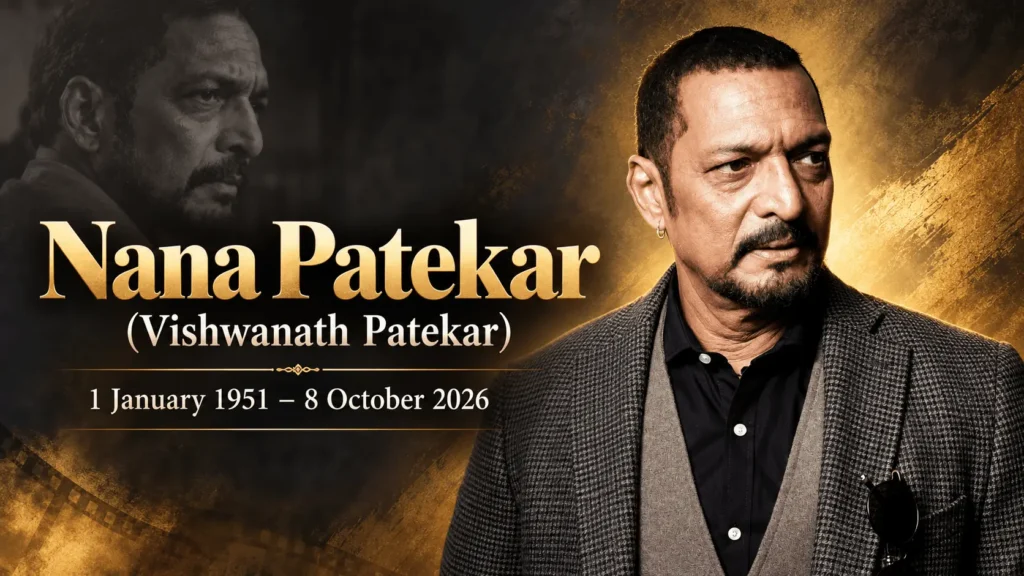
Nana Patekar (born Vishwanath Patekar, 1 January 1951 – 8 October 2026) was an Indian actor, director, writer and theatre artist who worked in Hindi and Marathi cinema for nearly five decades. He came to films in 1978 from the Marathi stage and never entirely shed its habits: the trained voice, the stillness before a line, and the refusal to soften a character to make him likeable. At a time when the dominant screen hero was polished and reassuring, Patekar played gangsters, soldiers, policemen and wounded fathers who seemed to have walked in from the street outside the theatre.
That approach carried him from small parts in the 1980s to the soft-spoken crime boss of Parinda (1989), the disillusioned cynic of Krantiveer (1994) and, late in his career, the self-destructive stage legend of the Marathi film Natsamrat (2016). He directed Prahaar: The Final Attack (1991), won three National Film Awards and four Filmfare Awards, and received the Padma Shri in 2013. He died in Goa on 8 October 2026, aged 75. This article traces his life from a small coastal town in Maharashtra to the front rank of Indian cinema, examines how his performances worked, and records his philanthropy, his controversies and his legacy.
Nana Patekar at a Glance
| Particular | Details |
| Full Name | Vishwanath Patekar (known as Nana Patekar) |
| Date of Birth | 1 January 1951 |
| Date of Death | 8 October 2026 (aged 75), Goa, India |
| Place of Birth | Murud-Janjira, Raigad district, Maharashtra, India |
| Profession | Actor, filmmaker, writer, playback singer, philanthropist |
| Years Active | 1978–2026 (film debut: Gaman, 1978) |
| Primary Languages | Hindi, Marathi |
| Known For | Intense, naturalistic character roles; Parinda, Krantiveer, Natsamrat; co-founding the Naam Foundation |
| Major Awards | 3 National Film Awards; 4 Filmfare Awards; Filmfare Marathi Award for Best Actor (Natsamrat); Padma Shri (2013) |
| Notable Films | Parinda, Prahaar: The Final Attack, Krantiveer, Agni Sakshi, Khamoshi: The Musical, Yeshwant, Ab Tak Chhappan, Apaharan, Welcome, Natsamrat |
Patekar’s significance lies less in any single hit than in the kind of actor he made acceptable to mainstream audiences: a performer whose power came from texture and conviction rather than glamour. His career linked Marathi theatre, the realist tradition of Indian parallel cinema and the commercial Hindi film, and few actors moved between those worlds with so little compromise. He worked until shortly before his death, making his one of the longest continuous careers among Indian character actors of his generation.
Early Life and Family Background
Childhood and Upbringing
Vishwanath Patekar was born on 1 January 1951 in Murud-Janjira, a small coastal town in what is now Maharashtra’s Raigad district, best known for the sea fort of Janjira. He came from a Marathi family. It was a place of fishermen, traders and old family houses, far from the studios of Mumbai, and he often spoke of it as home.
Biographical accounts agree on a few broad points. His family had ties to both Murud and Mumbai, and the household was connected with the textile-painting trade. Patekar said in interviews that his father ran a small business of this kind and encouraged his interest in the stage, travelling to watch his plays. That support mattered: it meant performance was not something to be hidden in the family. His mother, Nirmala, lived to the age of 99; news reports record that he performed her last rites in Mumbai, and that he had lived with her in a modest flat in the city.
One point needs careful handling. Online profiles disagree about the name of his father, with different pages giving different names. Because reliable sources do not agree, this article does not name him. The same caution applies to many colourful anecdotes about his childhood that circulate online but cannot be traced to a primary interview.
Several profiles describe a boyhood divided between Mumbai and Murud. The contrast between a crowded, competitive metropolis and a quiet coastal community may help explain why his later screen characters feel rooted in specific places rather than in generic film-land settings, though that is an interpretation, not a documented fact.
Education and Early Interests
Patekar said that he began doing theatre in his school days. He then studied applied art at the Sir J.J. Institute of Applied Art in Mumbai, one of the country’s best-known art schools. Some biographies also mention the Bandra School of Arts (now the L.S. Raheja School of Art) as an earlier stop. After his studies he worked in advertising.
This visual training left a mark on his work. He drew and sketched throughout his life, and his screen performances show a strong sense of composition: the line of a shoulder, the angle of a head, the way a figure occupies a doorway.
His interest in performance developed in parallel with his art studies. Student and amateur stage work led him into the Marathi theatre circuit of Mumbai, where the education was practical and unforgiving. Theatre gave him a vocabulary of voice and movement, and a community of serious practitioners at a time when he was still deciding what to do with his life.
Challenges That Shaped His Personality
Profiles regularly describe a youth marked by financial pressure and the need to work while studying, but the specifics differ from account to account and many widely repeated stories cannot be confirmed. What can be said fairly is that he reached cinema without industry connections, had a working life before acting, and was already in his late twenties when his first film appeared. He often presented himself as someone who valued plain living and treated acting as a job to be done well rather than as a route to status.
It would be speculation to claim that these experiences explain his artistic choices, and this article does not do so. The safer observation is that his characters were usually people under pressure: men shaped by anger, loss, duty or disappointment. He consistently chose such roles over safer, more glamorous ones, a pattern consistent with an actor who was comfortable with difficulty.
Nana Patekar’s Journey into Theatre and Acting
Discovering Theatre
Theatre came first. Patekar became part of Mumbai’s Marathi experimental and professional theatre scene in the 1970s, and several biographies connect him with Awishkar, the group associated with Arvind and Sulabha Deshpande. The Marathi stage of that decade was known for serious, text-driven work and for demanding a great deal from its actors: there were no retakes, no close-ups and no editing to hide a weak scene.
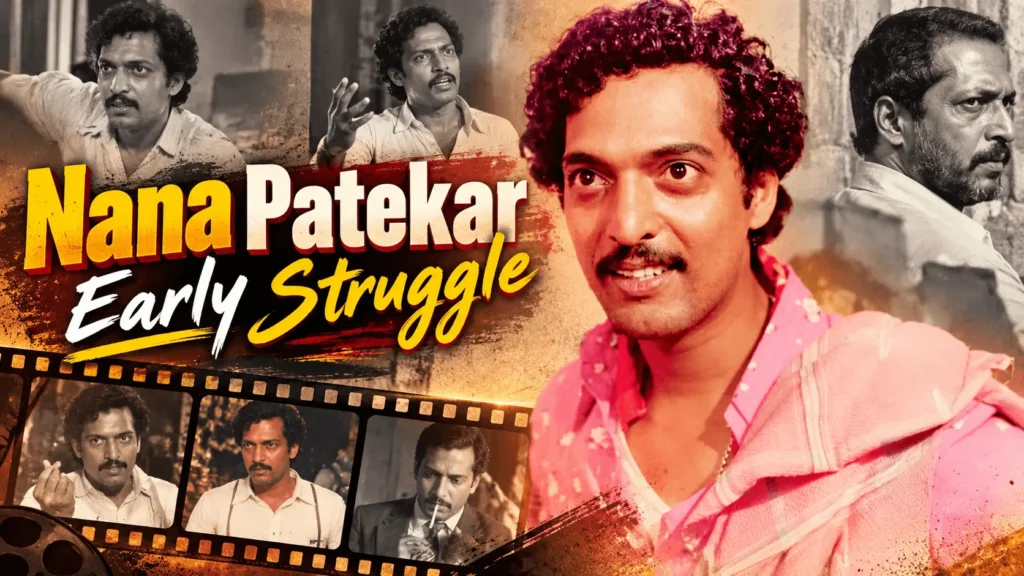
In that environment an actor learned to hold an audience for two or three hours, to project to the last row without shouting, and to build a character from the inside. Stage performance was also where he began to understand rhythm. A line works differently depending on what comes before it, and a silence can say as much as a speech.
Learning the Craft of Acting
Theatre training was visible in the specific tools he later used on screen.
- Voice: a low, gravelly, slightly nasal register that he could drop to a near-whisper or push to a roar without losing clarity.
- Dialogue delivery: he treated lines as rhythm, placing emphasis on a few words and allowing pauses to carry meaning.
- Body language: economical movement, with sudden bursts that felt earned. He rarely used gesture for decoration.
- Characterisation: a strong eye for habit, such as how a man walks, sits, drinks, listens or avoids someone’s gaze.
- Emotional control: the ability to hold anger under the surface through a long scene, so that when it broke it landed with force.
These skills are not mysterious. They are what stage actors build over years of repetition, and what distinguished Patekar was how thoroughly he carried them over to the camera.
How Theatre Influenced His Film Career
On film, those stage habits became a signature. A close-up is far more forgiving than a stage, but Patekar often played scenes as if the last row were watching, which gave his best work an unusual charge. His long, dialogue-driven confrontations felt built rather than improvised, with a clear beginning, a rising line and a break.
Theatre also shaped his sense of what a role should demand. He was drawn to parts that carried moral weight and gave an actor room to work, which helps explain why he returned to stories from the Marathi stage so often in his later career.
Nana Patekar’s Early Film Career
Early Film Appearances
Patekar made his film debut in Muzaffar Ali’s Gaman (1978), a quiet, humane film about migration to Mumbai and the loneliness of the city, made in the tradition of serious Indian cinema. His first Marathi film is usually listed as Sinhasan (1979), directed by Jabbar Patel, a political drama about power in Maharashtra’s politics and journalism.
These were not star-making parts, but they placed him inside thoughtful, issue-oriented filmmaking from the start. Through the 1980s he appeared in films such as Aaj Ki Awaz (1984), Ankush (1986), Pratighaat (1987) and Mohre (1987), many of them low-budget social dramas about unemployment, crime and corruption with a rough, street-level feel that suited his temperament. He also appeared in Mira Nair’s Salaam Bombay! (1988), the Oscar-nominated film that brought him wider international recognition.
The Struggle for Recognition
The industry of the 1980s favoured conventional leading men, and an actor with Patekar’s looks, voice and manner did not fit easily into the mainstream. He played supporting parts, many of them intense and angry, and was frequently offered similar roles. Recognition came slowly: critics and fellow actors noticed him well before general audiences did.
It is notable that he did not try to reshape himself to suit the system. He waited for roles that matched his style and accepted a slower rise in exchange for work he respected.
Becoming a Recognised Character Actor
By the end of the 1980s, Patekar had a reputation among directors as an actor who could carry a difficult scene. Ankush is often remembered as an early showcase of how he brought raw anger and frustration to a mainstream-adjacent film. The next step was to find a director who could build a film around that quality. That director was Vidhu Vinod Chopra.
The Breakthrough Years
Parinda and Critical Recognition
Chopra’s Parinda (1989) changed his career. Patekar played Anna Seth, a Mumbai crime boss who dominated the film from the moment he appeared. The story followed two brothers, played by Jackie Shroff and Anil Kapoor, who are drawn into Anna’s world, and it unfolded with a visual style that was unusually dark and controlled for Hindi cinema of its time.
What made Anna memorable was how little the performance depended on conventional villainy. He was calm, domestic in manner and capable of affection, which made the violence more disturbing when it arrived. Instead of shouting, Patekar used softness and patience, so that the menace seemed to come from authority rather than temper.
Critics praised the performance, and it earned him his first National Film Award for Best Supporting Actor and the Filmfare Award for Best Supporting Actor. (Sources date these awards to either 1989 or 1990, depending on whether they count the film’s release year or the ceremony year.) For Patekar the effect was decisive: he was no longer a promising supporting actor but the person people mentioned first when they discussed the film.
Krantiveer and Mainstream Success
If Parinda established him with critics, Mehul Kumar’s Krantiveer (1994) made him a mainstream draw. Patekar played Pratap Narayan Tilak, a rowdy, cynical man with no interest in public causes who is slowly pulled into resisting communal hatred and corruption. The cast included Dimple Kapadia, who won the Filmfare Award for Best Supporting Actress for her role, Atul Agnihotri, Mamta Kulkarni, Danny Denzongpa and Paresh Rawal.
The film’s social themes were delivered in a popular, dramatic format, and audiences responded strongly. Patekar’s long speeches, in which Pratap finally confronts people who profit from division, became some of the most talked-about scenes of the year. The performance won him the National Film Award for Best Actor, the Filmfare Award for Best Actor and the Screen Award for Best Actor, the clearest official recognition of his rise from supporting actor to leading man.
Establishing an Unconventional Screen Identity
Patekar did not follow the Bollywood hero model of the period. He rarely played romantic leads, seldom relied on glamour and was not interested in the usual star packaging. His characters were often flawed, short-tempered and morally uncertain, and he treated dialogue as a weapon rather than a flourish.
Audiences accepted this because the performances had a believable emotional logic. By the mid-1990s he had become something rare in Hindi cinema: a star who looked and sounded like a character actor, and who was trusted to carry a film without the apparatus of a conventional leading man.
Nana Patekar’s Most Important Films and Performances
This section looks at the films that shaped his career, with attention to context, craft and consequence rather than strict chronology. Each entry notes the release year, the character, the surrounding context, what the performance did, the themes involved, how the film was received and why it mattered to his career.
Parinda
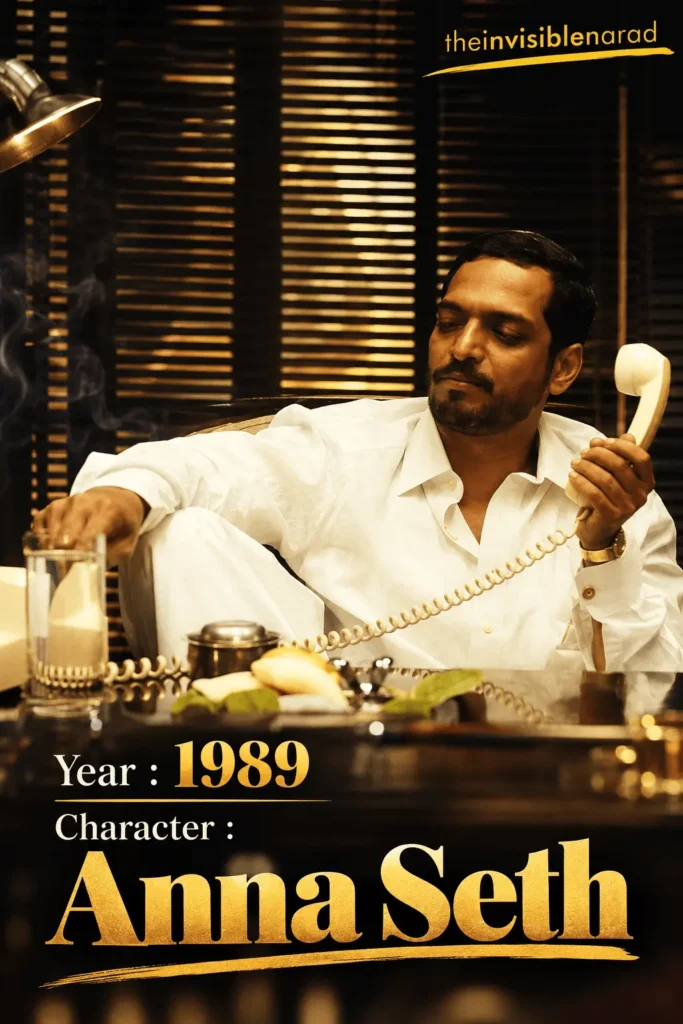
Year and character: 1989; Anna Seth. Context: Vidhu Vinod Chopra’s Parinda arrived when Hindi crime cinema was dominated by loud, formulaic gangsters. Chopra’s film was moodier, with a noir-influenced look, low light and a sense of moral decay, and it followed two brothers (played by Jackie Shroff and Anil Kapoor) trapped between loyalty and conscience in a Mumbai underworld run by Anna.
Performance and themes: Patekar’s Anna was a patriarch as much as a gangster. He spoke softly, treated subordinates like family and punished betrayal with chilling calm. The theme was how violence is normalised by affection and habit, and Patekar’s quiet command made the idea believable. Response and importance: Critics praised the film’s style and Patekar’s performance, and he received his first National Film Award (Best Supporting Actor) and the Filmfare Award for Best Supporting Actor. It was the point at which his reputation changed from respected to important.
Performance and themes: Patekar’s Anna was a patriarch as much as a gangster. He spoke softly, treated subordinates like family and punished betrayal with chilling calm. The theme was how violence is normalised by affection and habit, and Patekar’s quiet command made the idea believable. Response and importance: Critics praised the film’s style and Patekar’s performance, and he received his first National Film Award (Best Supporting Actor) and the Filmfare Award for Best Supporting Actor. It was the point at which his reputation changed from respected to important.
Prahaar: The Final Attack
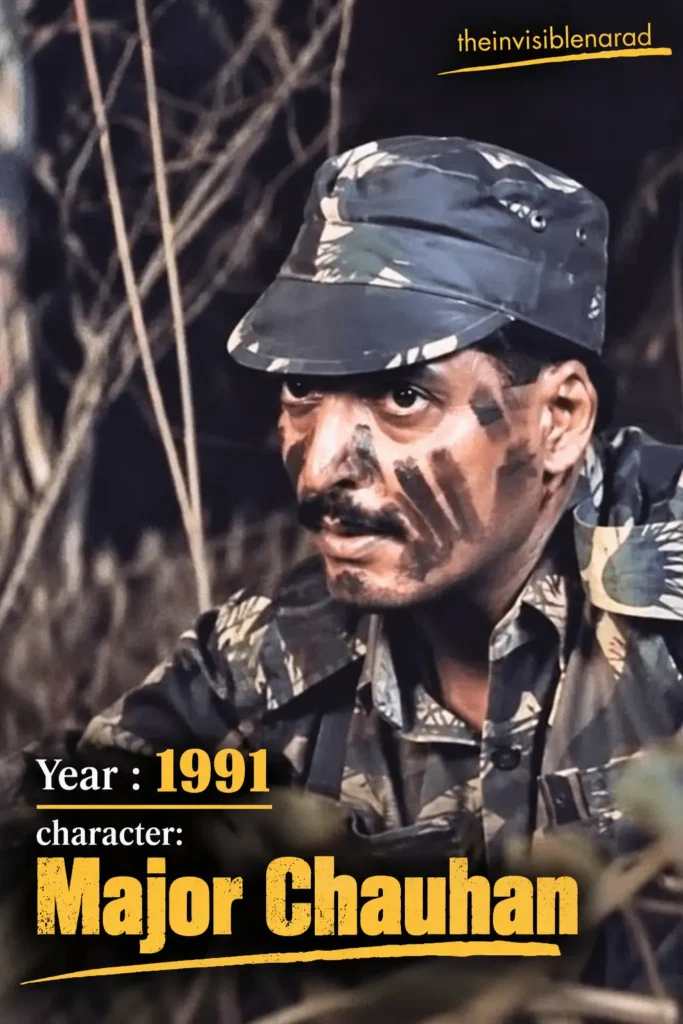
Year and character: 1991; Major Chauhan, with Patekar also as director and co-writer. Context: The film was built around a strict army officer who trains a young cadet and then discovers that discipline cannot fully protect them from the corruption and violence of the world outside the barracks.
Performance and themes: As Chauhan, Patekar played a man whose sense of duty was almost physical: he stood straight, spoke in clipped orders and rarely let feeling show. The film’s themes were duty versus decay, the cost of discipline and the helplessness of decent people against organised crime. He prepared with military training, which is part of why the barracks scenes feel authentic. Response and importance: It was a modest commercial performer on release but built a lasting reputation, especially for its training sequences and its seriousness. Action director Shyam Kaushal later said Patekar gave him his break on this film. It was Patekar’s only directorial credit and the clearest expression of his own sensibility.
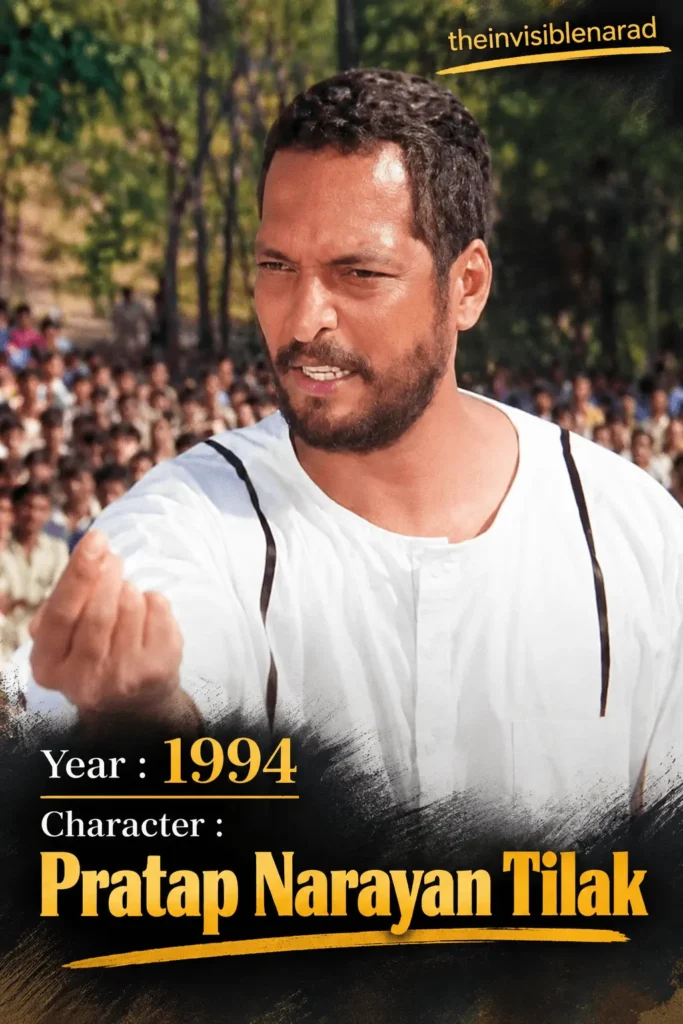
Krantiveer
Year and character: 1994; Pratap Narayan Tilak. Context: Mehul Kumar’s film was a mainstream drama about communal tension and political corruption, released during a period of heightened anxiety about both.
Performance and themes: Pratap began as an irresponsible, sarcastic man who refused to care about anything beyond himself, and the film’s emotional core was his gradual awakening. Patekar made that change credible by letting Pratap’s cynicism harden at first and then crack in small, specific ways, before the long speeches in which the character finally voiced his anger at public hypocrisy. Response and importance: The film was a major box-office success and brought him the National Film Award for Best Actor, the Filmfare Best Actor award and the Screen Award. It turned a respected character actor into a lead.
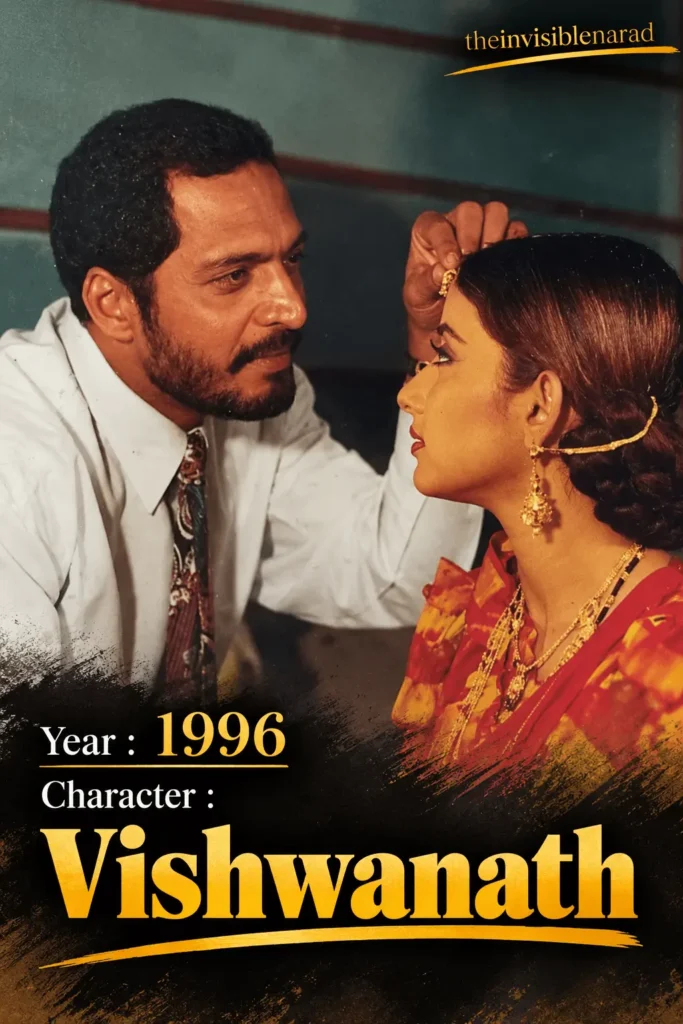
Agni Sakshi
Year and character: 1996; Vishwanath. Context: Partho Ghosh’s thriller followed a woman (Manisha Koirala) whose marriage to a possessive, abusive man (Patekar) becomes a nightmare, with Jackie Shroff in the cast.
Performance and themes: The role was extremely unpleasant: Vishwanath was jealous, controlling and capable of sudden cruelty. Patekar did not play him as a cartoon villain. His menace came from conviction and from the ordinary domestic setting, which made the story about control and fear rather than spectacle. Response and importance: The performance earned him his second National Film Award for Best Supporting Actor and showed that he could bring disturbing realism to a mainstream thriller.

Khamoshi: The Musical
Year and character: 1996; Joseph. Context: Sanjay Leela Bhansali’s debut told the story of a family in which both parents were deaf and mute and their daughter (Manisha Koirala) grew up wanting to pursue music. Salman Khan and Seema Biswas were also in the cast.
Performance and themes: The role required Patekar to act with minimal sound, communicating pride, protectiveness, hurt and love through face, hands and posture. The film’s themes were communication, sacrifice and the gap between parents and children. Response and importance: Critics responded warmly to the sincerity of the performance, and the film gave him one of his gentlest roles. It showed that his intensity could be directed toward tenderness as effectively as toward menace.
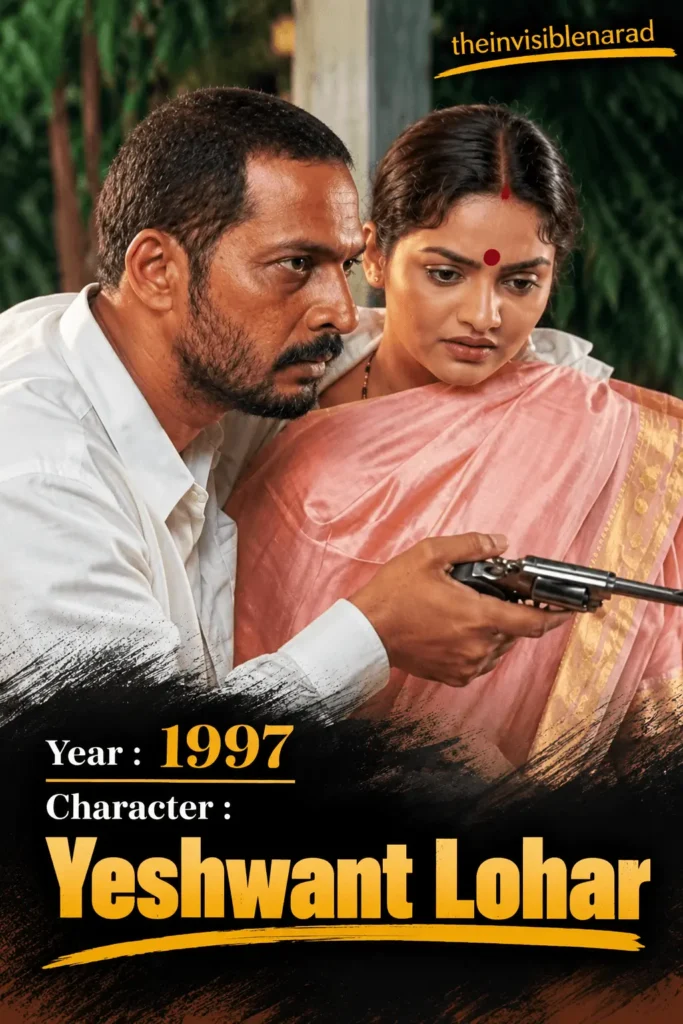
Yeshwant
Year and character: 1997; Yeshwant Lohar. Context: N. Chandra’s film was a commercial police drama in which an honest officer is driven to confront crime and corruption.
Performance and themes: Patekar’s Yeshwant was a righteous, angry man who treated the badge as a moral weapon. The film played to his strengths: forceful dialogue, a sense of injured justice and the ability to hold a crowd’s attention with speech. He also sang for the film. Response and importance: It was a popular film that confirmed his position as a draw for audiences who wanted socially charged action, and it shows how, in the late 1990s, he could carry a commercial vehicle largely on persona.
Ab Tak Chhappan
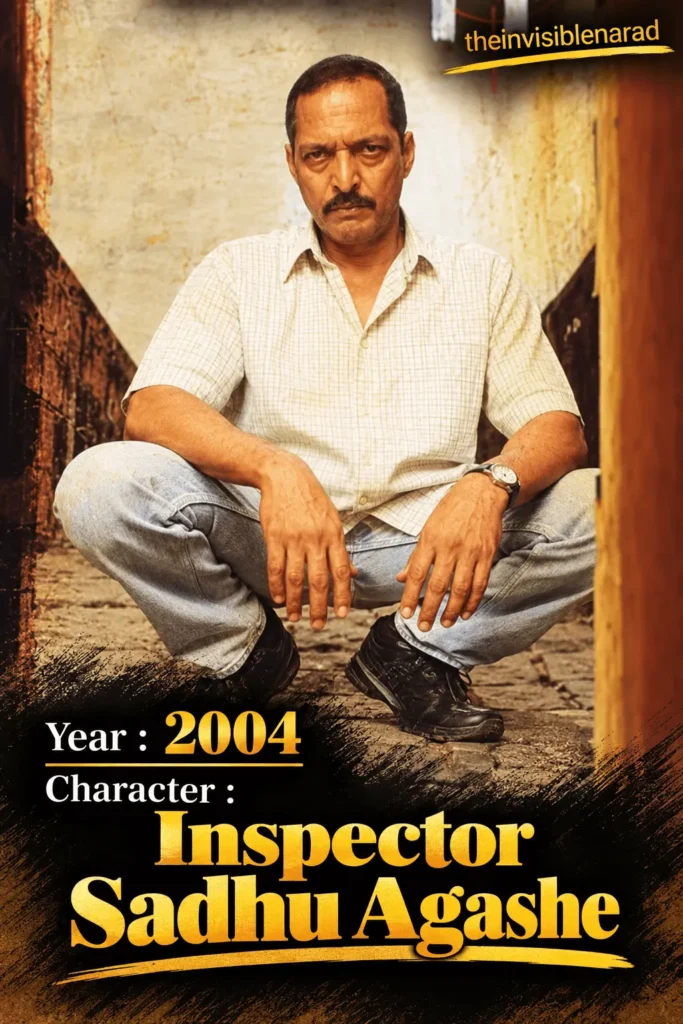
Year and character: 2004; Inspector Sadhu Agashe. Context: Shimit Amin’s film, written by Sandeep Shrivastava and produced by Ram Gopal Varma, was inspired by the world of Mumbai police encounter specialists; the Agashe character is reported to have been based on the policeman Daya Nayak. It arrived as Hindi cinema was beginning to treat urban crime more realistically.
Performance and themes: Agashe was a veteran who had seen too much and was increasingly doubtful about the institution he served. Patekar played him with exhaustion, dry humour and moral ambiguity. The themes were institutional compromise, the cost of violence and the loneliness of men who do the state’s dirty work. Response and importance: The film was widely praised for its realism. One reviewer described Patekar’s performance as a refreshing change from his usual loud, frothing manner, a useful reminder of how much restraint was a choice. It earned him the BFJA Best Actor award, and a sequel followed in 2015.
Apaharan
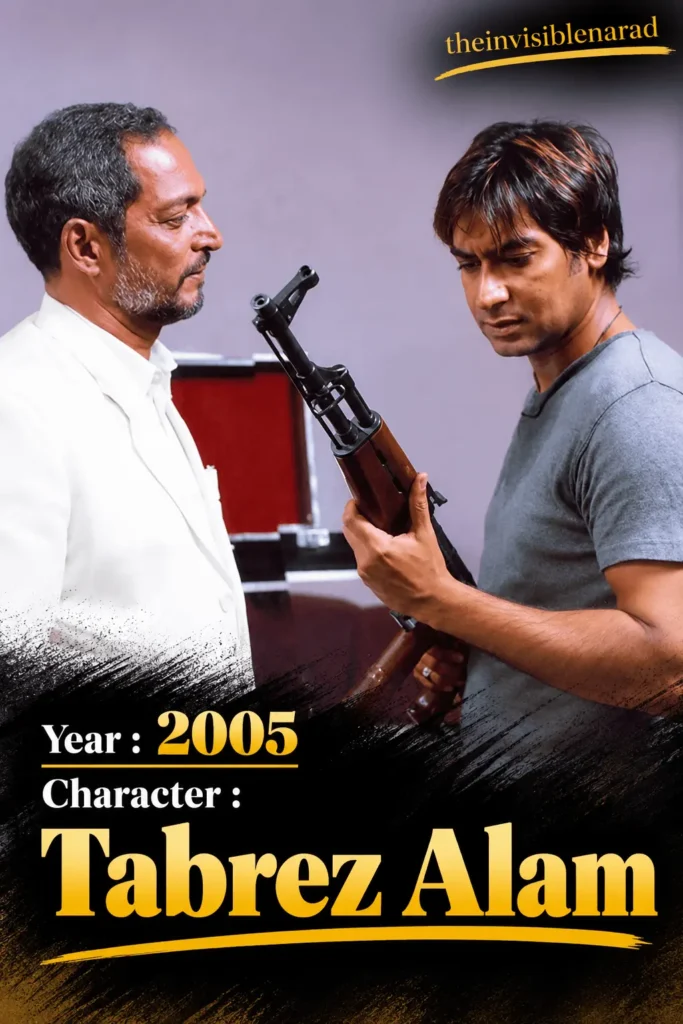
Year and character: 2005; Tabrez Alam. Context: Prakash Jha’s film examined the kidnapping economy of Bihar and its links with politics and crime, with Ajay Devgn as the protagonist.
Performance and themes: Tabrez was powerful, calculating and charismatic, the kind of man who treated violence as an administrative tool. The themes were political corruption, unemployment and the way criminal networks fill gaps left by the state. Response and importance: Critics noted that Patekar could dominate scenes even in an ensemble, and the performance earned him his second Filmfare Award for Best Villain. With his earlier wins, it made him the only actor to take Filmfare’s Best Actor, Best Supporting Actor and Best Villain awards.
Welcome
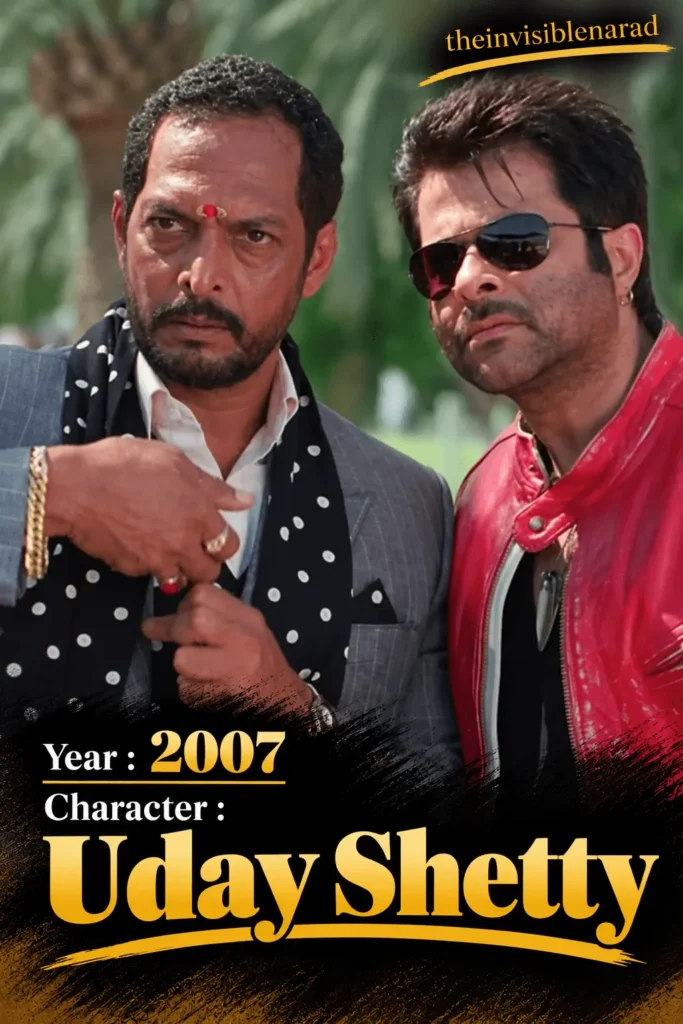
Year and character: 2007; Uday Shetty. Context: Anees Bazmee’s comedy followed a gangster who wanted a respectable groom for his sister, and it assembled a large ensemble including Akshay Kumar, Anil Kapoor and Katrina Kaif.
Performance and themes: Patekar played Uday with a straight face, treating absurd demands as serious business. The comedy worked because he never played for laughs: the humour came from a dangerous man who wanted only a conventional family. Response and importance: The film was a large commercial success and introduced him to a younger, comedy-loving audience. He reprised the role in the sequel Welcome Back (2015), and Uday Shetty remained one of his most widely recognised characters.
Natsamrat
Year and character: 2016; Ganpat Ramchandra Belwalkar. Context: Mahesh Manjrekar’s Marathi film adapted V.V. Shirwadkar (Kusumagraj)’s celebrated play about a retired stage actor who gives away his possessions and is abandoned.
Performance and themes: Patekar played Ganpat as a once-grand figure who gradually lost his dignity, and the themes of ageing, pride and family obligation gave the film its power. Response and importance: The film was a major success in Marathi cinema, and Patekar won the Filmfare Marathi Award for Best Actor. Many critics regard it as the summit of his later career; it is discussed in more detail in the section on Marathi cinema.

Other Films Worth Noting
Several other titles deserve mention. Angaar (1992) earned him the first of his Filmfare Best Villain awards. Raju Ban Gaya Gentleman (1992) and Tirangaa (1993) showed his ability to hold his own among established stars. In the children’s film Abhay (1994) he played a ghost, and he co-starred with Rishi Kapoor in Hum Dono (1995). Wajood (1998) gave him another complex, troubled character. In Raajneeti (2010) he played a politician, and Deool (2011), Dr. Prakash Baba Amte: The Real Hero (2014) and Aapla Manus (2018) extended his Marathi work. The Attacks of 26/11 (2013) cast him as police officer Rakesh Maria in a dramatisation of a real event, and in Kaala (2018) he played a politician opposite Rajinikanth.
What Makes Nana Patekar’s Acting Style Unique?
The previous section looked at what he acted in. This one ask how he acted.
His Powerful Dialogue Delivery
Patekar’s voice was the first thing most viewers remembered. It was rough, slightly rasping and instantly recognisable, and he controlled it like an instrument.
- Voice: a deep, textured register that gave even ordinary lines a sense of weight.
- Tone: he often began quietly, almost conversationally, which made the later shift to anger more shocking.
- Pace: his lines could arrive in a rapid, clipped stream or in slow, spaced phrases, depending on how much control the character had.
- Pauses: he left silences where other actors would fill space, forcing the other person in the scene, and the audience, to wait.
- Emotional emphasis: he tended to stress a single word rather than a whole sentence, which gave his speeches a distinctive, percussive rhythm.
The result was that his best-known lines worked as moments of character rather than as catchphrases. A speech by Patekar told you how a person thought, not only what he wanted to say.
Facial Expressions and Body Language
Patekar was as effective in silence as in speech. In Khamoshi: The Musical he communicated a father’s love entirely through posture, gesture and expression, since the character could not rely on spoken language. In Parinda, Anna’s menace came from stillness: a half-smile, a steady gaze, an unhurried walk. His eyes did much of the work, often showing suspicion, contempt or sorrow a beat before the dialogue arrived.
His body language was economical. Where many actors in the commercial tradition used broad gestures, he typically kept movement small and then allowed a sudden physical action to break the pattern. That contrast is one reason his violent moments felt startling rather than routine.
Intensity and Emotional Control
Intensity is the word most often attached to him, but the more interesting quality was how he rationed it. In his strongest films, anger was held in reserve and released at the right moment, so that it felt earned. The slow build in Krantiveer and the exhausted restraint of Ab Tak Chhappan show two different ways of managing the same emotional material.
When the quality ran unchecked, as in some weaker films, it could become mannered, and some critics noted that his familiar angry persona sometimes overshadowed thin scripts. The best of his work shows that his real skill was not volume but control.
Naturalistic Characterisation
His characters felt believable because they were built from small, specific habits rather than broad types. A police officer was tired in a particular way; a gangster had a domestic routine; a father hovered at the edge of a room. Patekar avoided glamour in his appearance and often let his characters look ordinary, unkempt or worn out, a choice that distinguished him from many contemporaries.
He also tended to give characters a clear internal logic, so that even a repellent man such as the husband in Agni Sakshi seemed to believe in his own behaviour. That sense of conviction is what makes naturalism work.
The Influence of Theatre on His Screen Performances
The stage explains the structure of his scenes. He built a performance as a sequence of beats, with clear changes of intention, which is why long confrontations and monologues were his strongest moments. The trained voice, the awareness of the whole body and the habit of committing fully to a scene all trace back to the Marathi theatre in which he learned his craft. It is also why his work in Natsamrat, a film about a stage actor, felt so personal: it brought his two worlds together.
Nana Patekar’s Versatility as an Actor
This section looks at range across genres and languages, without repeating the film-by-film analysis above.
Serious and Dramatic Roles
Patekar’s reputation rested on drama, but within that category his roles varied widely. Parinda required cold, controlled menace; Krantiveer needed a believable arc from cynicism to conscience; Natsamrat demanded the slow collapse of a proud man. The three share intensity but little else: one is a study in power, another in awakening, the third in loss. That spread, not the number of dramatic roles, is the better indication of range.
Crime and Action Characters
He played criminals, policemen and soldiers throughout his career, and the interest lies in the differences. Anna Seth in Parinda was a patient, paternal boss. Major Chauhan in Prahaar was a disciplined, idealistic soldier. Sadhu Agashe in Ab Tak Chhappan was a tired, compromised policeman. Tabrez Alam in Apaharan was a political operator. In each case he altered body language, vocal rhythm and the kind of authority the character carried, so that these roles did not blur into one another.
Socially Relevant Roles
Many of his films engaged with social and political questions: communal violence in Krantiveer, institutional failure in Prahaar, political and criminal corruption in Apaharan, and rural and political life in the Marathi film Deool. His later work included roles drawn from public life, such as the social worker Dr. Prakash Amte in Dr. Prakash Baba Amte: The Real Hero (2014) and police officer Rakesh Maria in The Attacks of 26/11 (2013). Playing real people brings its own demands, since the audience carries an image of the person, and Patekar’s approach was generally to suggest rather than imitate.
Comedy and Lighter Performances
His comic turns were rarer but memorable. In Welcome and Welcome Back he played Uday Shetty with complete seriousness, which was the secret of the character’s humour. Taxi No. 9 2 11: Nau Do Gyarah (2006) and the narration he provided for Phir Hera Pheri (2006) show the same willingness to step outside the serious persona. Comedy, for him, depended on conviction: the character had to believe in his own absurd world.
Hindi and Marathi Cinema
In Hindi cinema, Patekar was often cast as a force of nature: an angry cop, a gangster, a soldier. The Hindi industry gave him scale, a wide audience and the major awards of his mid-career. In Marathi, his roles tended to be more interior and literary, with more room for monologue and moral complexity, as in Deool, Dr. Prakash Baba Amte and Natsamrat. His Hindi work made him widely famous, while many critics felt his Marathi work let him show the fullest range of his craft. The contrast was not a matter of quality so much as of register: Hindi cinema asked him to be larger than life, and Marathi cinema asked him to be life-sized.
Nana Patekar as a Director
Prahaar: The Final Attack
Prahaar: The Final Attack (1991) was the only feature film he directed, and he also co-wrote it and played its central role, Major Chauhan. The story followed Chauhan, a strict army officer who trains a young cadet, Peter, and later finds that the discipline of the barracks does not protect them from the violence and corruption of the city outside. The film moved between military training and urban crime, which allowed it to ask what duty means once the uniform comes off.
His directorial approach was plain and physical. The training sequences showed real preparation and avoided polished heroics, and the film gave its supporting characters room to develop, with a cast that included Madhuri Dixit, Dimple Kapadia and Gautam Joglekar. The tone was serious, almost austere. There was little interest in spectacle for its own sake; the violence was meant to hurt, not thrill.
The relationship between his acting and his filmmaking was close. Chauhan was stern, principled and angry in ways that echoed Patekar’s public persona, and the film’s moral centre rested on his performance. Because the film was so personal, it is often read as the clearest statement of what he cared about: honesty, duty and the idea that institutions should deserve the trust placed in them.
His Approach to Storytelling
With a single directorial credit it would be misleading to describe a long filmmaking career, but certain concerns are clear: duty versus corruption, the cost of discipline and the idea that institutions can fail the people who believe in them. The same ideas recurred in his acting choices, in Krantiveer, Ab Tak Chhappan and Yeshwant, which suggests that his instinct for stories was consistent whether he stood in front of or behind the camera. His storytelling favoured character over plot, speech over spectacle and moral argument over simple victory.
Nana Patekar and Marathi Cinema
His Connection with Marathi Theatre
His Marathi identity ran through his career. He began on the Marathi stage, and his Marathi films, from Sinhasan in 1979 to his late-career work, can be seen as a continuing conversation with that tradition. Marathi theatre values language, character and moral argument, all of which were visible in his strongest performances. Even in his Hindi films, the discipline of the stage was apparent in how he handled dialogue and silence.
His later decision to return to Marathi film in prominent roles can be read as a return to origins as much as a career choice. Maharashtra’s government acknowledged that connection at his death, announcing a state funeral in recognition of his contribution to theatre and cinema.
Natsamrat and Ganpat Belwalkar
Natsamrat (2016), directed by Mahesh Manjrekar, was adapted from V.V. Shirwadkar’s (Kusumagraj) celebrated Marathi play, which was influenced by Shakespeare’s King Lear and became famously associated on stage with Shriram Lagoo. Patekar played Ganpat Ramchandra Belwalkar, a revered stage actor who retires at the height of his fame and divides his property among his children, only to find himself humiliated and abandoned. The supporting cast included Vikram Gokhale and Medha Manjrekar.
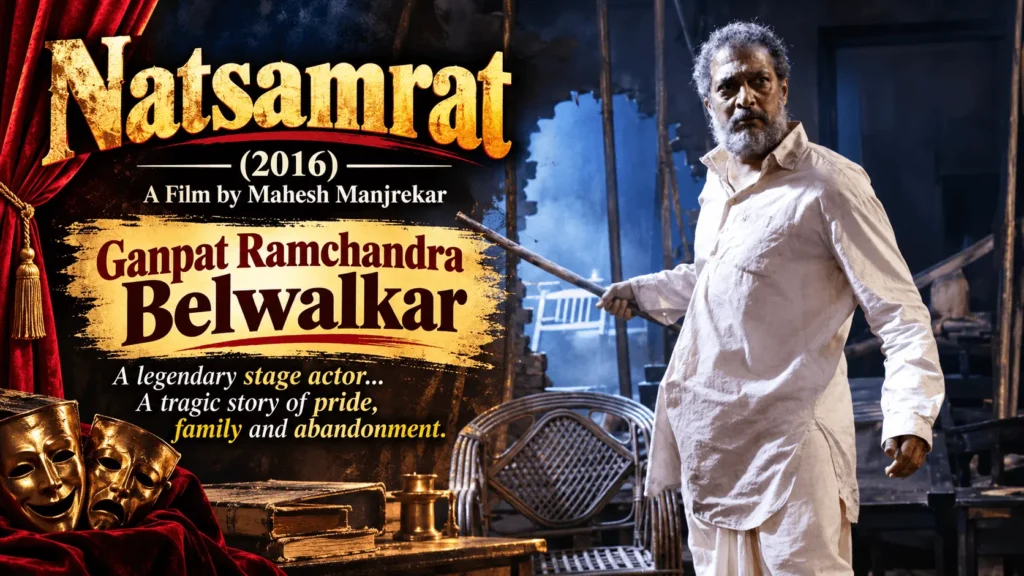
The character. Ganpat was an actor who had spent his life speaking other men’s lines. His speech was full of quotations and theatrical flourish, and his tragedy was that he could not find a way to speak plainly when it mattered.
The performance. The part was full of declamation, the kind of role that tempts an actor to overplay. Patekar’s best choices were the quiet ones: the weariness in his body, the confusion of a man who had always been applauded and now was not, and the sudden flashes of old stage grandeur. Film and stage registers met here, because the character was himself an actor, and Patekar’s own theatre background gave the portrayal unusual depth.
Emotional themes. The film dealt with ageing, pride, family obligation, and the loneliness that can follow public adulation. Its central emotional question was what remains of a person when the roles and the applause end.
Critical reception. The film was widely praised and was a major commercial success in Marathi cinema, and Patekar won the Filmfare Marathi Award for Best Actor for it.
Cultural significance. It brought a classic of Marathi drama to a broad modern audience and gave a new generation access to a story that had mostly lived on the stage. For Marathi viewers it was also a celebration of the state’s theatrical heritage.
His Contribution to Marathi Cinema
Beyond Natsamrat, he lent his star power to Marathi films that might otherwise have had a narrower audience. Deool (2011), a satirical film about faith and politics in a village, in which he played the politician Bhau Galande, Dr. Prakash Baba Amte: The Real Hero (2014), a biographical drama about the doctor and social worker, and the police drama Aapla Manus (2018) are examples. His presence helped draw attention to Marathi stories in a national market, and his public work in Maharashtra gave him a standing in the state that reached beyond cinema. He was, in that sense, both a Marathi actor and a Marathi public figure.
Awards, Honours and Career Recognition
This section collects formal recognition in one place. Sources date awards either by film year or by ceremony year, which explains occasional one-year differences. Only recognition that appears consistently across sources is listed. Nominations are not listed because a reliably complete record could not be confirmed.
National Film Awards
Patekar won three National Film Awards, all as winner:
- Best Supporting Actor for Parinda (1989 film; ceremony year given as 1990 in some sources)
- Best Actor for Krantiveer (1994 film; ceremony 1995)
- Best Supporting Actor for Agni Sakshi (1996 film; ceremony 1997 in some sources)
The progression is telling: recognition as a supporting actor, then as a lead, then again as a supporting actor in a role of dark intensity.
Filmfare Awards
He won four Filmfare Awards, all as winner:
- Best Supporting Actor for Parinda
- Best Villain for Angaar (1992)
- Best Actor for Krantiveer
- Best Villain for Apaharan (2005)
He is widely cited as the only actor to have won Filmfare’s Best Actor, Best Supporting Actor and Best Villain categories. In Marathi, profiles list two Filmfare Marathi Best Actor awards, one of them for Natsamrat.
Other Major Awards and Honours
- Star Screen Award for Best Actor for Krantiveer (winner)
- BFJA Best Actor award for Ab Tak Chhappan (winner)
- Maharashtra State Film Awards (two, according to profiles)
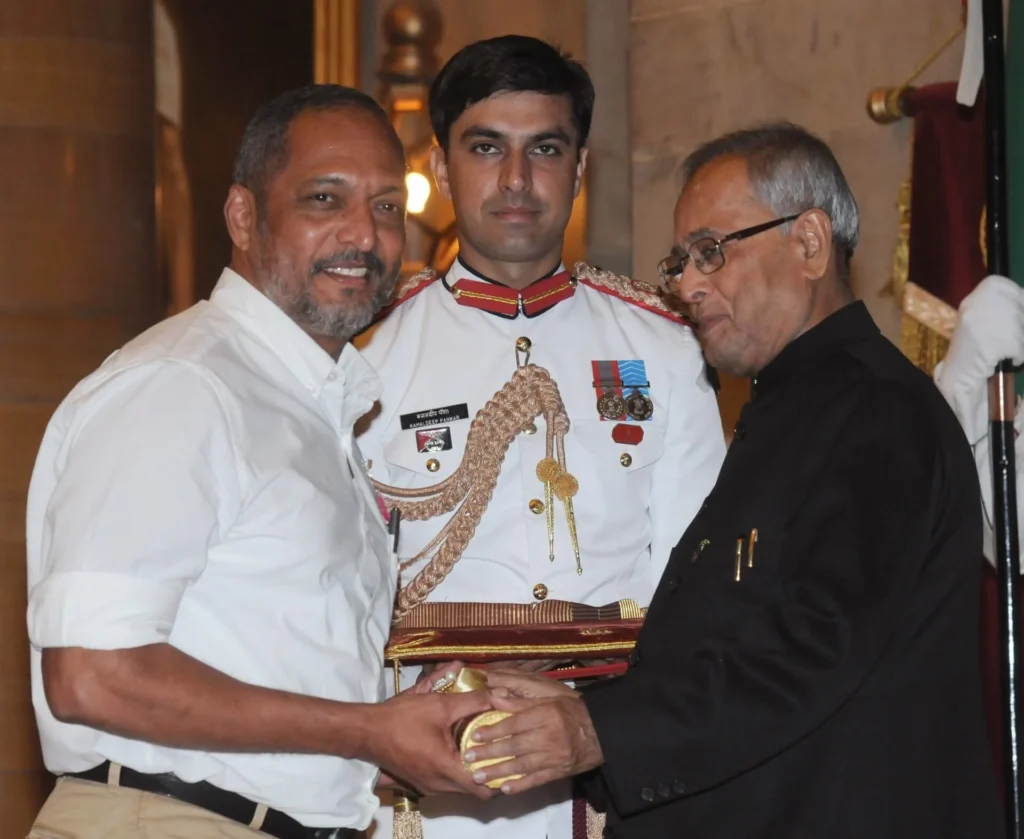
- Padma Shri (2013): the fourth-highest civilian honour in India, a government recognition announced on the eve of Republic Day for his contribution to the arts
- State funeral (2026): a posthumous honour from the Government of Maharashtra, described further in the section on his death
The Padma Shri is a special government honour, not a competitive award, and the distinction matters: it recognises a body of work and public contribution rather than a single performance.
His Standing Among Indian Actors
The awards track his career accurately: early recognition as a supporting actor, a lead-actor win at the peak of his popularity, later recognition in villain roles and, in recent years, in Marathi cinema. But they tell only part of the story. Many of his most admired performances, such as Ab Tak Chhappan and Khamoshi, are valued for reasons that trophies do not measure, and his influence on how audiences think of character acting was larger than his list of wins. Awards confirmed his standing, but they did not define it.
Nana Patekar’s Social Work and Humanitarian Activities
Support for Farmers and Rural Communities
His best-documented humanitarian work was the Naam Foundation, which he co-founded with actor Makarand Anaspure and which was registered in Pune in September 2015. It was created in response to the crisis facing drought-affected farmers in Maharashtra, a period of rising debt and distress in rural districts, and its work centred on helping families of farmers in distress and on rural relief efforts, including a village-adoption initiative. Readers who want exact figures on funds raised or projects completed should consult the foundation’s own published reports and reliable news coverage rather than social-media summaries.
Disaster Relief and Humanitarian Work
Beyond farmers, Patekar was described in news coverage as supporting relief efforts and the families of soldiers, which fits with the interest in the armed forces visible in Prahaar. Reference sources also record an honorary rank in the Indian Army’s Territorial Army, listing it as honorary lieutenant colonel with service from 1990, while some profiles describe an earlier honorary captaincy; accounts differ on dates and details. His contributions are reported in general terms in many places, but precise amounts, dates and recipients vary from source to source, so this article does not repeat figures that could not be confirmed.
His Approach to Philanthropy
In interviews he generally played down the idea of being a celebrity philanthropist and framed his involvement as practical and personal rather than promotional. As is often the case, the public statements are sparser than the claims made about him online, and unverified social-media posts attributed to him should be treated sceptically. What can be said is that the Naam Foundation is a registered, publicly known initiative and that his involvement in it was consistent from 2015 until his death; the foundation’s chief executive, Ganesh Thorat, spoke publicly about the funeral arrangements.
Controversies and Public Image
Major Controversies
The most significant controversy involved actor Tanushree Dutta, who in 2018, during the Indian #MeToo movement, repeated allegations about an incident during the shooting of a song for the film Horn ‘Ok’ Pleassss in 2008. A smaller, separate episode occurred in 2023, when a video of Patekar hitting a young man on a film-shoot location in Varanasi went viral.
Allegations, Responses and Verified Facts
Allegations. Dutta alleged that Patekar behaved inappropriately with her during the 2008 shoot. She said she had raised the matter with the film industry’s association at the time and filed a police complaint in 2018.
Response. Patekar denied the allegations and described them as false.
Findings. According to news reports, the police submitted a report to the court in 2019 saying that no evidence was found against him (commonly referred to as a B-summary), and a Mumbai court dismissed the case in 2025, as international news agencies reported at the time of his death. Dutta disputed the outcome publicly.
What can be said as fact. The allegations were made and publicly denied, and the legal process ended without a finding against him. Neither the allegations nor the denial should be presented as established fact beyond what the court record shows.
The 2023 Varanasi incident. News reports at first described the footage as the actor hitting a young fan who approached for a selfie, and it drew widespread criticism. Patekar then said the moment was a rehearsal take for a scene in the film Journey, that he had mistaken the young man for a member of the unit, and he apologised. The explanation was reported alongside the original footage, and he was not reported to face legal consequences.
How Controversies Shaped His Public Image
The Dutta episode drew strong public debate and polarised reactions, with some supporting her account and others accepting his denial, and it returned to the news at intervals. His reputation as a blunt and sometimes short-tempered personality made him a frequent subject of media attention, but his screen work and his philanthropic profile continued to define his career for many viewers. A balanced reading keeps the legal record, the public reaction and the creative record separate rather than allowing one to stand for the others.
Nana Patekar Beyond Acting
Public Interviews and Statements
Patekar gave relatively few interviews compared with many of his contemporaries, and those he gave tended to be direct, humorous and sometimes combative. He spoke often about theatre, about his distance from the film industry’s social scene and about his work in rural Maharashtra. In his last public appearance, days before his death, he spoke at a theatre event in Goa about the importance of keeping the performing arts alive.
His Views on Fame and Celebrity Culture
His public remarks suggested a scepticism toward celebrity. He often presented acting as a job rather than an identity, and he kept a distance from the usual publicity machinery of Bollywood. This was consistent with a career built on character roles rather than on a managed star image.
His Public Persona
He was often perceived as outspoken, unconventional and private. Part of that came from his on-screen image and part from his choice to live modestly and keep family life out of publicity. The few documented facts are these: he married Neelkanti Patekar in 1978, the couple had one son, Malhar, and news reports at the time of his death described him as separated from his wife. Beyond what he said himself, it would be speculation to explain his temperament, and this article does not attempt to.
Final Years, Death and Funeral
Last Works
Patekar remained active into his seventies. His later screen work included Aapla Manus and Kaala (both 2018), The Vaccine War (2023) and Vanvaas (2024), and he made his OTT debut with Prakash Jha’s Laal Batti. Details of any completed but unreleased projects had not been confirmed by independent sources at the time of writing, so this article does not describe them.
Death
Nana Patekar died on 8 October 2026, aged 75, in Goa. The Press Trust of India, quoting a doctor at the hospital where he was pronounced dead, reported a suspected cardiac arrest at his home, and other reports gave the time of death as around 5:20 a.m. His son, Malhar Patekar, confirmed the death and said the actor had died of natural causes. Officials said a medico-legal case was registered and a post-mortem examination would be conducted, a routine procedure; at the time of writing the results had not been reported.
Tributes and Funeral
Prime Minister Narendra Modi praised his intensity, individuality and unmistakable presence as an actor, and colleagues from the film industry, including Akshay Kumar, who worked with him in several films, paid tribute. The Government of Maharashtra announced a state funeral in recognition of his contribution to theatre and cinema. His last rites were held on 8 October 2026 at his farmhouse in Donje, near Pune, with full state honours, according to the Pune district collector and the Naam Foundation.
Nana Patekar’s Influence and Legacy
His Contribution to Character Acting
Patekar helped widen the space for actors who succeed on skill rather than looks. His rise showed that a mainstream audience would follow a character actor into the leading role if the writing and performance were strong enough, and it encouraged filmmakers to build films around performers rather than around conventional stars.
His Contribution to Realistic Indian Cinema
Films such as Parinda, Prahaar and Ab Tak Chhappan belong to a tradition of grounded, socially aware Hindi cinema, and his performances gave them credibility. He bridged commercial and realist filmmaking at a time when the two were often kept apart, bringing the discipline of parallel cinema into films with wide distribution.
His Influence on Younger Actors
It is common to hear younger actors described as heirs to Patekar’s style, but direct influence is best claimed only where actors have said so themselves in credible interviews, and this article does not attribute it speculatively. What can be said is that actors who prefer intense, character-led roles work in a space he helped legitimise, and that colleagues described his presence in terms of honesty and economy after his death.
Why His Performances Remain Memorable
- Dialogue delivery: an unmistakable voice and rhythm that could be recognised in a single line.
- Characters: flawed, specific, human, and rarely reduced to type.
- Emotional intensity: held in reserve and released with purpose.
- Film selection: a consistent preference for roles with moral and emotional weight.
- Distinctive personality: a public presence that matched his screen persona without becoming a brand.
Nana Patekar’s Place in Indian Cinema
A balanced assessment would place him among the most distinctive actors of his generation, with a strong record in both Hindi and Marathi cinema. His output was uneven, as with most long careers, and some of his later Hindi work is less memorable than his peak years. But the best of it, from Parinda to Natsamrat, has lasting value, and it shaped how Indian audiences think about intensity on screen.
Nana Patekar’s Personal Philosophy and Outlook
This section is deliberately cautious. Patekar’s views are known mainly through interviews of varying reliability, and quotation-aggregator pages are not a sound basis for attribution, so what follows is limited to broad, publicly reflected themes and contains no direct quotations.
His Views on Success and Failure
He tended to downplay awards and box-office results and to describe a career as a matter of steady work. This is consistent with a long record of choosing roles by their substance rather than their visibility, and with the fact that he accepted slow recognition in the 1980s rather than changing his style. Failure, in his public remarks, was treated as part of the work rather than as a verdict on the person.
His Attitude Toward Fame and Money
He was often described as uninterested in the trappings of stardom and said that his income did not depend solely on films. No reliable net-worth figure is given here because published estimates are unverified. His public choices, including his work with the Naam Foundation and his modest public lifestyle, were consistent with someone who saw money as a means rather than a measure.
His Approach to Acting and Life
He presented acting as a craft built on observation and honesty, and he connected it to a sense of social responsibility visible in his work with rural communities. The same preference for plain speech that marked his screen characters appeared in his interviews, including his last public remarks about the importance of keeping the performing arts alive. Readers who want his own words should look to full interviews rather than summaries or social-media quotations.
Lesser-Known Facts About Nana Patekar
Early Career Facts
- His film debut was Gaman (1978), and his first Marathi film is usually listed as Sinhasan (1979).
- He trained in applied art at the Sir J.J. Institute and worked in advertising before acting became his main occupation.
- He is associated with the Marathi theatre group Awishkar, run by Arvind and Sulabha Deshpande.
Theatre and Acting Facts
- He did playback singing for his own films, including Yeshwant (1997), Wajood (1998) and Aanch (2003).
- He drew and sketched, a pastime that connected to his art-school background.
- He is widely cited as the only actor to have won Filmfare’s Best Actor, Best Supporting Actor and Best Villain awards.
Film and Directorial Facts
- Prahaar remained his only film as director, and he also co-wrote it.
- He played a ghost in the children’s film Abhay (1994), which won two awards at the 42nd National Film Festival.
- Action director Shyam Kaushal publicly credited Patekar with giving him his break on Prahaar.
- Profiles report that his son Malhar appeared as the young Patekar in Prahaar.
Social Work Facts
- The Naam Foundation was registered in Pune in September 2015 and co-founded with Makarand Anaspure.
- Reference sources record an honorary rank in the Territorial Army; they list it as honorary lieutenant colonel, while some profiles mention an earlier honorary captaincy.
- His funeral was held at his farmhouse in Donje near Pune, a property that figured prominently in his life.
Nana Patekar’s Best Performances
This ranking is subjective and editorial. It is not an industry ranking, and other critics would order it differently. It weighs craft, difficulty, influence and how well each performance has lasted.
1. Natsamrat – Ganpat Belwalkar (2016)
Type: tragic, theatrical lead. Why it stands out: he blended stage grandeur with quiet vulnerability and turned a classic Marathi role into a deeply personal portrait of ageing. Importance: the capstone of his Marathi work and, for many critics, of his whole career.
2. Parinda – Anna Seth (1989)
Type: crime boss, supporting. Why it stands out: calm, domestic menace in place of shouting, which changed what a screen gangster could be. Importance: his breakthrough and first National Award.
3. Ab Tak Chhappan – Sadhu Agashe (2004)
Type: realistic police drama. Why it stands out: he showed control at its finest, with an exhausted, ironic officer rather than a conventional action hero. Importance: proof that his later work could match his early peak.
4. Krantiveer – Pratap Narayan Tilak (1994)
Type: socially charged lead. Why it stands out: a believable journey from cynicism to conviction, with long speeches that held the screen. Importance: the popular centrepiece of his career and his National Award for Best Actor.
5. Khamoshi: The Musical – Joseph (1996)
Type: tender, largely silent family drama. Why it stands out: it proved that his strength was not only volume. Importance: it widened the public sense of his range.
6. Agni Sakshi – Vishwanath (1996)
Type: domestic thriller villain. Why it stands out: the cruelty felt real rather than theatrical, which is why it was disturbing. Importance: his second National Award and a mainstream demonstration of his capacity for menace.
7. Prahaar: The Final Attack – Major Chauhan (1991)
Type: disciplined soldier, lead. Why it stands out: a stern, principled performance by an actor who also directed. Importance: it matters for his personal investment in the material and as his only film as director.
8. Apaharan – Tabrez Alam (2005)
Type: political villain. Why it stands out: he dominated an ensemble without raising his voice more than necessary. Importance: his second Filmfare Best Villain award, completing his unusual sweep of Filmfare categories.
9. Welcome – Uday Shetty (2007)
Type: comic villain. Why it stands out: deadpan timing made absurd dialogue funny. Importance: it was not his deepest performance, but it widened his audience and showed his sense of humour.
Conclusion & FAQs
Nana Patekar’s career was the story of an actor who built his reputation on conviction rather than convenience. He grew up in a small coastal town, trained as an artist, learned discipline on the Marathi stage and entered films at a time when mainstream cinema had little room for his kind of presence. Years of supporting roles prepared him for Parinda, which turned a calm, menacing crime boss into a lasting screen figure, and Krantiveer made that intensity a mainstream force.
What followed was a body of work that moved comfortably between registers: the anger of Prahaar, the tenderness of Khamoshi, the weariness of Ab Tak Chhappan, the comic deadpan of Welcome and the tragic grandeur of Natsamrat. His Marathi films kept him connected to the stage that formed him, and the Naam Foundation extended his public life beyond cinema. His record was also not free of controversy, and an honest account has to note both the allegations that were made and the denial and legal outcome that followed.
What made his career distinctive was not simply intensity, which many actors can generate, but the control behind it. He showed that a character actor could carry a film, that realism and drama could coexist in popular cinema, and that a performance could be powerful because of what it held back. His death on 8 October 2026 closed a career of nearly five decades, and that combination, more than any single award or hit, is why his work continues to be revisited.
Frequently Asked Questions (FAQs)
Who is Nana Patekar?
Nana Patekar (1951–2026) was an Indian actor, director, writer and philanthropist who worked in Hindi and Marathi cinema. He was known for intense character roles in films such as Parinda, Krantiveer and Natsamrat, for directing Prahaar: The Final Attack, and for co-founding the Naam Foundation.
What is Nana Patekar’s real name?
His birth name was Vishwanath Patekar. “Nana” was the nickname by which he was known professionally.
When was Nana Patekar born?
He was born on 1 January 1951 in Murud-Janjira, in what is now Maharashtra, India.
When and how did Nana Patekar die?
He died on 8 October 2026 in Goa. News agencies reported a suspected cardiac arrest at his home, and his son said he had died of natural causes. A post-mortem examination was to be conducted as a routine part of the medico-legal process.
What are Nana Patekar’s best movies?
Commonly cited choices include Parinda, Krantiveer, Prahaar, Khamoshi: The Musical, Ab Tak Chhappan, Apaharan and the Marathi film Natsamrat. Any list is a matter of taste.
Has Nana Patekar won a National Film Award?
Yes, three: Best Supporting Actor for Parinda and for Agni Sakshi, and Best Actor for Krantiveer.
What is Nana Patekar’s most famous role?
There is no single answer. Anna Seth in Parinda and Pratap Narayan Tilak in Krantiveer are among the best known in Hindi cinema, while Ganpat Belwalkar in Natsamrat is the best known in Marathi.
Is Nana Patekar a Marathi actor?
He was of Marathi background, began in Marathi theatre and acted in many Marathi films, but he worked in both Hindi and Marathi cinema.
What is Nana Patekar known for?
He was known for intense, naturalistic performances, a distinctive voice and delivery, the film Prahaar as director, and social work through the Naam Foundation.
What social work has Nana Patekar done?
He co-founded the Naam Foundation in 2015 with Makarand Anaspure, which supports drought-affected farmers and their families in Maharashtra.