
Introduction
Overview of the Chola Dynasty
The Chola Dynasty stands as one of the longest-ruling and most influential dynasties in Indian history, representing a remarkable blend of political strength, cultural refinement, and maritime ambition. Its roots can be traced back to the early historic period referenced in Sangam literature (circa 300 BCE), but its true imperial phase emerged between the 9th and 13th centuries CE, when it evolved into a formidable South Indian empire.
Geographically, the Cholas originated in the fertile plains of the Kaveri River valley in present-day Tamil Nadu. From this agrarian heartland, they gradually expanded their influence across southern India, including large parts of present-day Tamil Nadu, Karnataka, Andhra Pradesh, and Kerala. At the height of their power under rulers like Rajaraja Chola I and Rajendra Chola I, their empire extended beyond the Indian subcontinent to Sri Lanka, the Maldives, and parts of Southeast Asia, including regions influenced by the Srivijaya Empire.
Chronologically, their history can be divided into three broad phases:
- Early Cholas (Sangam Age): Known through literary sources rather than inscriptions
- Interregnum (Decline Period): A phase of relative obscurity
- Imperial Cholas (c. 850–1279 CE): The golden age marked by territorial expansion, administrative sophistication, and cultural brilliance
In the broader canvas of Indian history, the Cholas occupy a unique position. While northern empires like the Mauryas and Guptas often dominate mainstream narratives, the Cholas represent the pinnacle of southern statecraft and cultural expression. Their legacy challenges the notion that political and cultural dynamism in ancient India was confined to the north, offering instead a powerful southern perspective rooted in Tamil civilization.
Significance of the Cholas
Political, Cultural, and Maritime Importance
The Chola Dynasty was not merely a regional power—it was an empire that demonstrated advanced governance, strategic military planning, and a deep commitment to cultural patronage. Politically, the Cholas developed a highly organized administrative system that combined centralized authority with remarkable local autonomy. Their village assemblies (sabhas and ur) are often cited as early examples of participatory governance, supported by detailed inscriptional records that reflect transparency and accountability.
Culturally, the Cholas ushered in a renaissance of art, architecture, and literature. Their temples were not just places of worship but also centers of economic activity, education, and social life. Monumental structures like the Brihadeeswarar Temple stand as enduring testaments to their architectural genius, combining engineering precision with spiritual symbolism. The Chola period also saw the flourishing of bronze sculpture, particularly the iconic representation of Nataraja (Shiva as the cosmic dancer), which remains one of the most celebrated forms of Indian art globally.
What truly set the Cholas apart, however, was their maritime vision. Unlike many contemporary Indian dynasties, they recognized the strategic and economic importance of naval power. Their well-organized navy enabled them to conduct overseas expeditions, protect trade routes, and project influence far beyond the Indian coastline. This maritime strength positioned them as one of the earliest examples of a seafaring empire in Indian history.
Contribution to Global Trade and Cultural Exchange
The Chola Empire played a pivotal role in shaping early global trade networks across the Indian Ocean. Their ports, such as Kaveripattinam (Puhar), became bustling hubs of international commerce, connecting India with China, Southeast Asia, and the Arab world. Trade goods included textiles, spices, precious stones, and metalwork, all of which contributed to a thriving economy.
Merchant guilds like the Ayyavole 500 operated with remarkable autonomy and reach, facilitating long-distance trade and establishing commercial settlements abroad. These guilds not only promoted economic exchange but also acted as carriers of culture, religion, and language.
Through trade and conquest, the Cholas facilitated a significant cultural exchange between India and Southeast Asia. Elements of Indian religion, temple architecture, language (particularly Sanskrit and Tamil), and administrative practices found their way into regions such as modern-day Indonesia, Malaysia, and Thailand. This was not a process of forced imposition but rather one of mutual interaction and adaptation, often referred to as “Indianization.”
In essence, the Cholas contributed to an early form of globalization—where ideas, goods, and cultural practices moved fluidly across borders. Their ability to integrate economic ambition with cultural diplomacy ensured that their influence extended far beyond their political boundaries.
Origins and Early History
Sangam Age References
The earliest historical foundations of the Chola Dynasty emerge from the rich corpus of Tamil literature known as Sangam literature, composed roughly between 300 BCE and 300 CE. Unlike later inscription-heavy periods, this era relies primarily on poetic anthologies such as Purananuru, Akananuru, and Pattinappalai, which together offer a textured, though sometimes stylized, account of early Chola polity and society.
These texts portray the Cholas as one of the three dominant Tamil powers—the others being the Cheras and the Pandyas—engaged in constant rivalry, alliance-building, and territorial assertion. The Chola rulers are depicted as valorous warriors and generous patrons, often celebrated in bardic traditions for their military exploits and largesse toward poets.
From a socio-political perspective, the Sangam age reveals a decentralized yet dynamic landscape. Power was not rigidly centralized; instead, it revolved around a network of chieftains and local elites who acknowledged the authority of a paramount ruler. The economy was a mix of agrarian stability and maritime activity, with fertile river valleys like the Kaveri basin supporting agriculture, while coastal towns facilitated trade.
Urban centers such as Kaveripattinam (also known as Puhar) are vividly described in literature as thriving ports bustling with merchants, artisans, and foreign traders. These accounts indicate early exposure to international trade, especially with the Roman world, as evidenced by archaeological finds like Roman coins in South India.
Importantly, Sangam literature also reflects a society structured around kinship, martial values, and evolving social hierarchies. While not as rigidly stratified as later caste systems, distinctions based on occupation and status were clearly emerging. This period, therefore, represents the formative stage of Chola identity—rooted in Tamil culture, regional power struggles, and early economic networks.
Early Rulers and Legends
Among the early rulers of the Chola lineage, Karikala Chola stands out as a semi-historical figure whose legacy bridges myth and recorded tradition. Celebrated extensively in Sangam texts, Karikala is credited with transforming the Chola kingdom from a regional power into a more organized and influential polity.
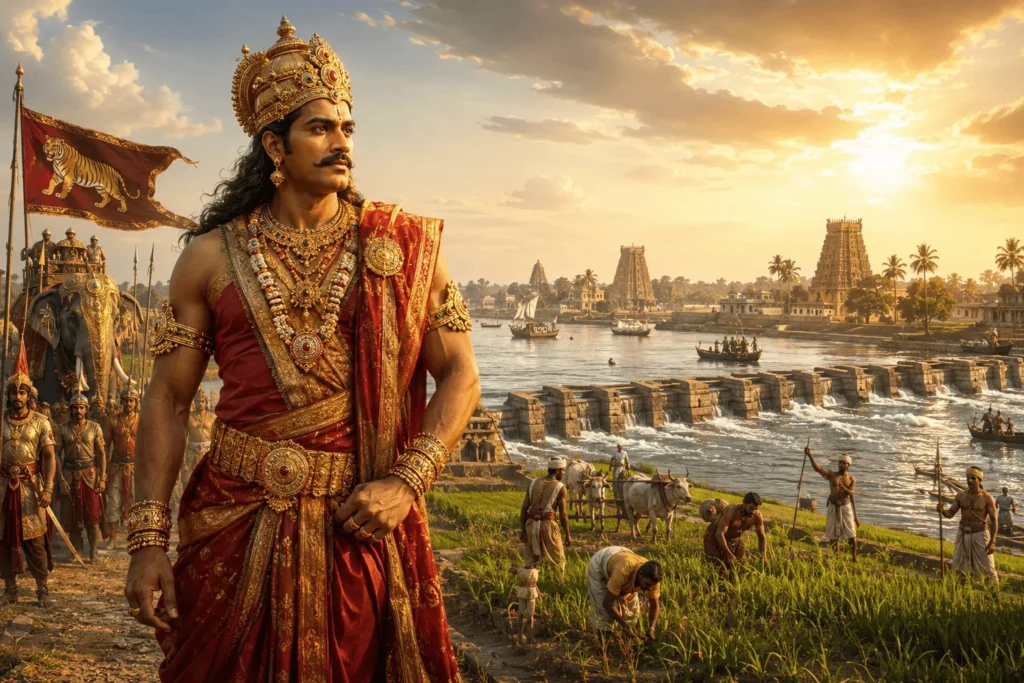
His most notable achievement is often associated with the construction of the Grand Anicut (Kallanai Dam) across the Kaveri River—one of the oldest water-regulation structures still in use today. This engineering feat not only demonstrates technical ingenuity but also highlights the Cholas’ early emphasis on irrigation and agricultural expansion, which would later become the backbone of their imperial economy.
Karikala’s reign is also linked to decisive military victories over rival Tamil kingdoms, consolidating Chola authority in the region. Literary sources describe his campaigns as both strategic and symbolic, reinforcing his image as a unifier and protector of the Tamil land.
Parallel to political consolidation was the development of early urban centers. Cities like Kaveripattinam evolved into cosmopolitan hubs where trade, governance, and culture intersected. These urban spaces were marked by organized marketplaces, warehouses, residential quarters, and ports that facilitated long-distance trade. The presence of foreign merchants—referred to as “Yavanas” in Tamil texts—suggests that these cities were already integrated into broader transregional networks.
However, it is important to approach these accounts with a critical lens. Much of what is known about Karikala and his contemporaries comes from literary traditions that blend fact with poetic embellishment. While archaeological and inscriptional evidence supports certain aspects, historians continue to reconstruct this period through interdisciplinary methods, balancing literary narratives with material findings.
Decline After the Sangam Period
Despite the vibrancy of the Sangam age, the Chola power began to wane in the centuries that followed. By the end of the early historic period, the political dominance of the Cholas diminished significantly, giving way to a phase often described as an interregnum.
Several factors contributed to this decline. Internally, the decentralized nature of governance may have limited the ability of the Cholas to maintain long-term political cohesion. Externally, the rise of competing dynasties, particularly the Pandyas and later the Pallavas, challenged Chola authority and gradually eroded their territorial control.
This period is marked by a scarcity of reliable historical records, making it difficult to trace a continuous political narrative. Unlike the Sangam age or the later imperial phase, there is limited inscriptional or literary evidence to document Chola activities. As a result, the dynasty appears to fade into relative obscurity, surviving perhaps as minor chieftains rather than dominant rulers.
Yet, this phase should not be interpreted merely as a collapse. Instead, it represents a transitional period during which the foundational elements of Chola identity—agrarian strength, cultural continuity, and regional presence—were preserved, albeit in a subdued form. These latent strengths would later enable a dramatic resurgence under leaders like Vijayalaya Chola in the 9th century CE.
Revival and Emergence of the Imperial Cholas
After centuries of relative obscurity following the Sangam age, the Chola Dynasty re-emerged in the 9th century CE with renewed political energy and strategic clarity. This phase marks one of the most remarkable comebacks in Indian history—transforming a diminished lineage into a powerful and expansionist empire. The revival was not accidental; it was the result of calculated leadership, favorable geopolitical conditions, and a deep-rooted socio-economic base in the fertile Kaveri region.
Rise of Vijayalaya Chola
Role of Vijayalaya Chola
The resurgence of Chola power is inseparably linked to the leadership of Vijayalaya Chola, who is widely regarded as the founder of the Imperial Chola line. Emerging during a time when South India was dominated by the Pallavas and Pandyas, Vijayalaya demonstrated both political acumen and opportunistic strategy.
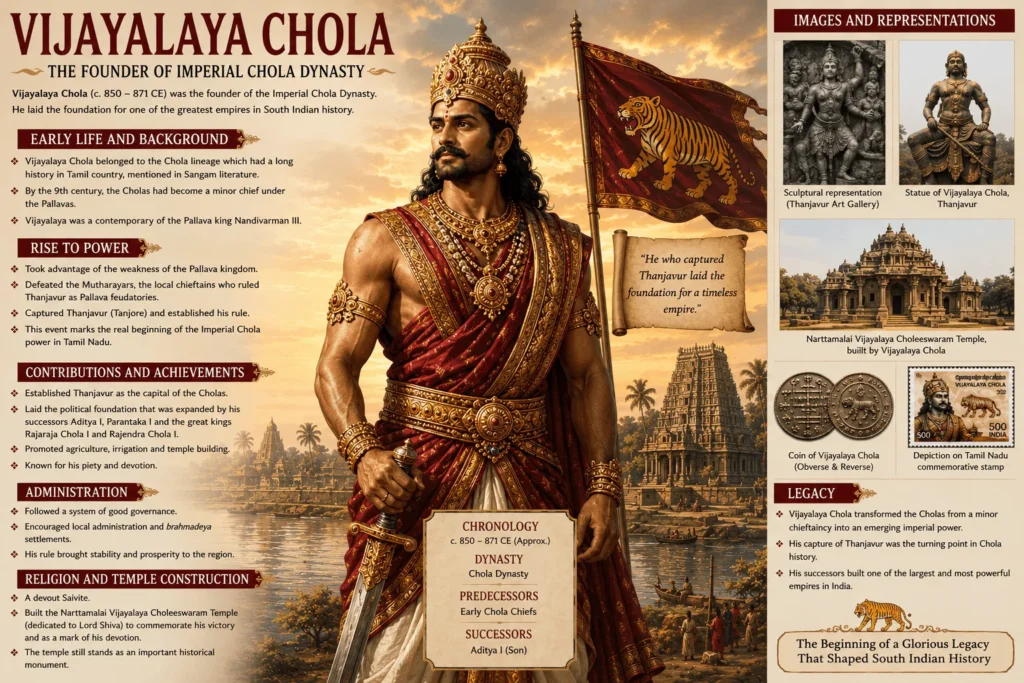
Rather than confronting powerful kingdoms directly at the outset, he capitalized on the weakening influence of the Pallavas, who were engaged in prolonged conflicts with the Rashtrakutas. This shifting political landscape created a window of opportunity that Vijayalaya skillfully exploited. Initially a minor chieftain, he gradually asserted independence and began expanding his territorial base.
What distinguishes Vijayalaya’s role is not merely his military success but his ability to re-establish Chola identity as a legitimate and sovereign शक्ति (power). He invoked ancestral prestige while simultaneously building a new political structure suited to the realities of the time. This blend of tradition and innovation laid the groundwork for future expansion.
Capture of Thanjavur
A defining moment in Vijayalaya’s rise was the capture of Thanjavur (Tanjore) around the mid-9th century CE. At the time, Thanjavur was under the control of the Muttaraiyars, local chiefs who were subordinate to the Pallavas. Vijayalaya’s successful seizure of this strategically located city marked the beginning of a new political era.
Thanjavur was not chosen arbitrarily. Its location in the fertile Kaveri delta made it an agricultural powerhouse, capable of sustaining a growing population and a standing army. Moreover, it held immense strategic value as a defensible urban center with access to inland and coastal trade routes.
Following its conquest, Vijayalaya established Thanjavur as the Chola capital and initiated temple construction, including the shrine of Goddess Nishumbhasudini. This act was both religious and political—signaling divine sanction for his rule and reinforcing his legitimacy among local populations.
The capture of Thanjavur thus represents more than a territorial gain; it symbolizes the rebirth of Chola sovereignty and the transition from regional obscurity to political prominence.
Establishment of a Strong Kingdom
Consolidation of Power
Once established in Thanjavur, the Cholas under Vijayalaya and his successors focused on consolidating their newly acquired power. This phase was critical, as rapid expansion without internal stability could have led to fragmentation.
The Cholas adopted a multi-layered approach to consolidation:
- Administrative Structuring: They began organizing territories into manageable units, laying the foundation for a highly efficient administrative system that would later become a hallmark of the empire.
- Military Strengthening: A disciplined army was maintained to defend newly acquired territories and deter rival powers.
- Strategic Alliances: Diplomatic relations, including matrimonial alliances, were used to neutralize potential threats and strengthen political networks.
- Cultural Integration: Temple patronage and religious endowments were used to integrate diverse communities and reinforce loyalty to the ruling authority.
This phase also witnessed the gradual decline of Pallava influence and the containment of Pandya ambitions, allowing the Cholas to emerge as a dominant regional force.
Foundations of Imperial Expansion
The groundwork laid during this period directly enabled the spectacular expansion witnessed under later rulers like Rajaraja I and Rajendra I. Several key foundations were established:
- Agrarian Prosperity: The systematic use of irrigation, particularly in the Kaveri delta, ensured surplus production, which funded military campaigns and public works.
- Institutional Governance: The early development of local self-governing bodies (village assemblies) created a stable administrative base that could support large-scale expansion.
- Military Preparedness: The emphasis on disciplined forces and strategic planning prepared the Cholas for both land and naval campaigns.
- Economic Networks: Strengthening trade routes and commercial activity generated wealth and facilitated connections beyond regional boundaries.
Perhaps most importantly, this period cultivated a vision of empire—a shift from localized rule to expansive ambition. The Cholas no longer saw themselves as one among many regional powers; they began to position themselves as rightful rulers of a larger, interconnected domain.
The Golden Age of the Chola Empire
The zenith of the Chola Dynasty unfolded between the late 10th and early 12th centuries CE—a period often described as its Golden Age. This era, shaped primarily by the visionary leadership of Rajaraja Chola I and his son Rajendra Chola I, witnessed an extraordinary synthesis of military expansion, administrative sophistication, cultural patronage, and maritime ambition.
Rather than a simple phase of conquest, this period represents the maturation of a well-organized state into a global power, capable of influencing regions far beyond the Indian subcontinent.
Reign of Rajaraja Chola I
Achievements of Rajaraja Chola I
The reign of Rajaraja Chola I (r. c. 985–1014 CE) marks a decisive turning point in Chola history. His leadership transformed the Chola kingdom into a centralized and expansionist empire, characterized by efficiency, discipline, and cultural grandeur.
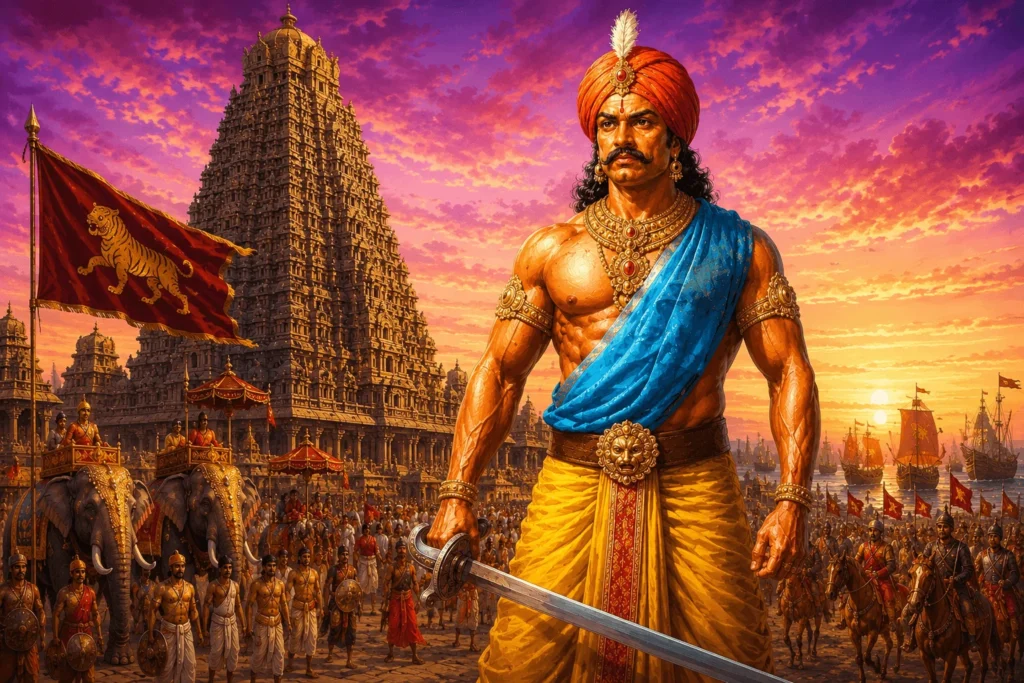
One of his most enduring contributions lies in institutional governance. Rajaraja introduced systematic revenue assessments, reorganized administrative divisions, and ensured meticulous record-keeping through inscriptions—many of which survive today and serve as primary historical sources. These inscriptions reveal not only royal orders but also detailed accounts of land grants, taxation, and temple endowments, reflecting a transparent and accountable system.
Equally significant was his patronage of art and architecture. The construction of the Brihadeeswarar Temple at Thanjavur stands as a monumental achievement of engineering and devotion. Built entirely of granite, this UNESCO-recognized structure symbolizes both imperial authority and spiritual vision, showcasing the Cholas’ mastery over architecture, sculpture, and urban planning.
Rajaraja also strengthened the empire’s naval capabilities, recognizing the importance of maritime power in securing trade routes and projecting influence across the Indian Ocean.
Military Conquests and Administrative Reforms
Rajaraja’s reign was marked by strategic and sustained military campaigns that significantly expanded Chola territory:
- Southern Expansion: He subdued the Pandyas and Cheras, establishing dominance over much of South India.
- Sri Lankan Campaign: A major portion of northern Sri Lanka was annexed, integrating it into the Chola administrative framework.
- Western Deccan Campaigns: His forces challenged the Western Chalukyas, extending influence into parts of Karnataka.
However, what distinguishes Rajaraja is not just conquest but consolidation. Unlike rulers who expanded rapidly without institutional support, he ensured that newly acquired territories were efficiently governed.
His administrative reforms included:
- Division of the empire into well-defined provinces (mandalams)
- Empowerment of local assemblies for grassroots governance
- Standardization of taxation and land surveys
- Integration of military and civil administration
These measures created a stable and scalable governance model, capable of supporting further expansion under his successors.
Expansion under Rajendra Chola I
Contributions of Rajendra Chola I
Building upon his father’s legacy, Rajendra Chola I (r. c. 1014–1044 CE) elevated the empire to unprecedented heights. If Rajaraja was the architect of imperial strength, Rajendra was its global strategist.
One of his most symbolic achievements was the establishment of a new capital, Gangaikonda Cholapuram, commemorating his northern campaigns. This city was not merely administrative but also a statement of imperial pride, reflecting the Cholas’ expanding horizon.
Rajendra continued to refine administrative practices, ensuring continuity and stability across the empire. He also maintained strong patronage of temples, art, and education, reinforcing cultural unity alongside political expansion.
Northern Expeditions and Overseas Campaigns
Rajendra Chola I is particularly renowned for his ambitious and far-reaching military expeditions, both on land and sea.
Northern Expedition
In a remarkable campaign, Rajendra’s forces advanced deep into northern India, reaching the Ganges River. This expedition was not aimed at permanent territorial control but rather at demonstrating military prowess and symbolic supremacy. The waters of the Ganges were ceremonially brought back to the south, reinforcing his title as “Gangaikonda” (the one who conquered the Ganges).
Naval Expeditions to Southeast Asia
Even more significant were his overseas campaigns:
- Naval expeditions targeted the Srivijaya Empire (in present-day Indonesia and Malaysia)
- Strategic ports and trade centers were attacked or brought under influence
- Control over key maritime routes in the Bay of Bengal was established
These campaigns highlight the Cholas as one of the few pre-modern Indian powers with a strong naval presence, capable of executing coordinated overseas operations.
Rather than direct colonization, these expeditions were aimed at securing trade dominance and political influence, ensuring that Chola interests were protected across vital commercial networks.
Peak of Political and Cultural Power
Territorial Extent
At its peak, the Chola Empire extended across:
- Most of South India
- Significant parts of Sri Lanka
- The Maldives
- Influence over Southeast Asian maritime regions
This vast territorial reach made the Cholas one of the most powerful empires in Asia during their time. Their control was not merely symbolic; it was supported by a robust administrative and military framework that ensured effective governance across diverse regions.
Stability and Prosperity
The Golden Age of the Cholas was characterized by remarkable internal stability and economic prosperity. Several factors contributed to this:
- Agricultural Abundance: The Kaveri delta, supported by advanced irrigation systems, ensured consistent agricultural output
- Thriving Trade: Ports facilitated active trade with China, Southeast Asia, and the Arab world
- Efficient Governance: A balance between central authority and local autonomy maintained political order
- Cultural Flourishing: Literature, temple architecture, bronze sculpture, and performing arts reached new heights
Temples functioned not only as religious centers but also as economic institutions, employing artisans, managing land, and redistributing wealth. Society, while hierarchical, experienced a degree of stability that allowed arts and intellectual pursuits to flourish.
The Golden Age of the Chola Empire represents a rare convergence of power, vision, and cultural vitality. Under Rajaraja Chola I and Rajendra Chola I, the empire achieved not only territorial expansion but also administrative excellence and global connectivity. This period stands as a testament to how strategic governance, economic strength, and cultural patronage can together create a civilization of enduring significance.
Administrative System and Governance
The administrative framework of the Chola Dynasty represents one of the most sophisticated governance models in pre-modern India. What sets the Cholas apart is their ability to combine centralized royal authority with deeply rooted local self-governance, supported by meticulous documentation and institutional clarity. Their system was not only efficient but also adaptable, enabling them to manage a vast and diverse empire while maintaining stability and economic growth.
Central Administration
Structure of Monarchy
At the apex of the Chola administrative system stood the king, who functioned as the supreme authority in political, military, and judicial matters. The monarchy was hereditary, yet effective governance depended largely on the competence and vision of individual rulers such as Rajaraja Chola I and Rajendra Chola I.
The king was not merely a ceremonial figure; he was actively involved in:
- Policy formulation
- Military leadership
- Religious patronage
- Oversight of administrative machinery
Royal authority was often reinforced through divine legitimacy, with kings portraying themselves as protectors of dharma and patrons of temples. However, this authority was not arbitrary—it was structured, documented, and executed through a well-defined bureaucratic system.
Role of Ministers and Officials
Supporting the king was a network of ministers and high-ranking officials who ensured the smooth functioning of the state. These included:
- Council of Ministers (Mantri Mandalam): Advisors who assisted in decision-making
- Military Commanders: Responsible for defense and expansion
- Revenue अधिकारियों: Managed taxation and land assessments
- Judicial Authorities: Oversaw dispute resolution
Administrative units were hierarchically organized into:
- Mandalams (provinces)
- Valanadus (sub-regions)
- Nadus (districts)
- Kurrams (villages)
Each level had designated officials responsible for governance, ensuring that authority flowed systematically from the center to the periphery.
A defining feature of Chola administration was its professionalism and accountability. Officials were expected to maintain detailed records, and their actions were often subject to scrutiny, particularly through inscriptional evidence. This created a system where governance was not only effective but also transparent by the standards of the time.
Local Self-Government
Village Assemblies: Sabha, Ur, Nagaram
One of the most remarkable aspects of Chola governance was its decentralized local administration, which empowered communities to manage their own affairs.
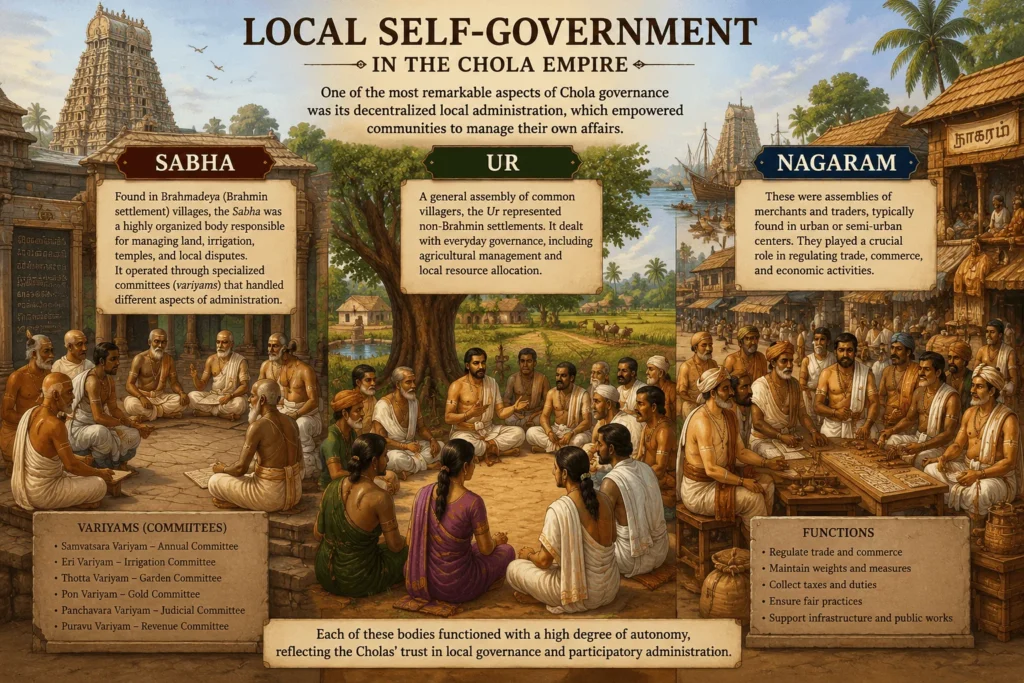
Three primary types of assemblies functioned at the local level:
- Sabha:
Found in Brahmadeya (Brahmin settlement) villages, the Sabha was a highly organized body responsible for managing land, irrigation, temples, and local disputes. It operated through specialized committees (variyams) that handled different aspects of administration. - Ur:
A general assembly of common villagers, the Ur represented non-Brahmin settlements. It dealt with everyday governance, including agricultural management and local resource allocation. - Nagaram:
These were assemblies of merchants and traders, typically found in urban or semi-urban centers. They played a crucial role in regulating trade, commerce, and economic activities.
Each of these bodies functioned with a high degree of autonomy, reflecting the Cholas’ trust in local governance structures.
Democratic Elements in Governance
What makes the Chola system particularly noteworthy is the presence of proto-democratic practices, especially in village administration.
- Election through the Kudavolai System:
Members of committees were often selected through a unique method where names were written on palm leaves and drawn from a pot—ensuring fairness and minimizing bias. - Eligibility Criteria:
Candidates had to meet strict qualifications related to age, education, property ownership, and moral conduct. - Accountability Mechanisms:
Officials could be removed for misconduct, and their tenure was limited to prevent concentration of power. - Committee-Based Governance:
Specialized committees handled irrigation, justice, taxation, and temple management, ensuring efficient division of responsibilities.
These features indicate that governance was not solely imposed from above but was participatory and community-driven, making the Chola system remarkably advanced for its time.
Revenue and Taxation
Land Revenue System
The backbone of the Chola economy—and consequently its administrative system—was its well-organized land revenue structure. Agriculture, particularly in the fertile Kaveri delta, generated substantial income for the state.
Key features of the revenue system included:
- Systematic Land Survey:
Land was carefully measured and classified based on fertility, irrigation facilities, and crop type. - Assessment of Tax:
Taxes were typically levied as a share of agricultural produce, though they could also be paid in cash. - Diverse Revenue Sources:
In addition to land tax, the state collected revenue from trade, customs duties, professional taxes, and fines. - Irrigation Management:
The state invested in canals, tanks, and dams, recognizing that agricultural productivity directly influenced revenue generation.
This structured approach ensured a stable and predictable flow of income, enabling the Cholas to fund military campaigns, public works, and cultural projec
Record-Keeping Through Inscriptions
A hallmark of Chola governance was its meticulous documentation, primarily through stone and copper-plate inscriptions. These inscriptions serve as invaluable historical sources today, offering direct insight into administrative practices.
They recorded:
- Land grants and tax details
- Royal आदेश (orders) and decrees
- Temple endowments and expenditures
- Decisions made by local assemblies
Unlike many ancient systems where records were either lost or poorly maintained, the Cholas ensured durability by engraving information on temple walls and copper plates. This not only preserved administrative data but also reinforced public accountability, as decisions were visible and verifiable.
The precision and volume of these records highlight a governance system that valued clarity, continuity, and institutional memory—qualities essential for managing a large empire.
The administrative system of the Cholas was a carefully balanced blend of centralized authority and decentralized participation. With a strong monarchy supported by an efficient bureaucracy, empowered local institutions, and a robust revenue framework, the Cholas created a governance model that was both stable and progressive. Their emphasis on documentation and accountability further underscores their administrative maturity, making them one of the most well-governed empires in pre-modern history.
Military Organization and Naval Dominance
The enduring strength of the Chola Dynasty rested not only on administrative excellence and economic prosperity but also on a highly disciplined military system and an exceptional naval force. Unlike many contemporary Indian kingdoms that remained largely land-focused, the Cholas developed a dual strategy—territorial expansion through land forces and maritime dominance through naval power. This combination enabled them to secure political authority, protect trade interests, and project influence across the Indian Ocean.
Structure of the Army
Infantry, Cavalry, and War Elephants
The Chola army was a well-organized and multi-tiered institution, designed for both offensive campaigns and territorial defense. It was composed of several key divisions:
- Infantry (Kaikkolar):
The backbone of the Chola military, the infantry consisted of trained foot soldiers equipped with swords, spears, bows, and shields. These troops were often organized into regiments named after the king or royal titles, reflecting loyalty and identity within the army. - Cavalry:
Though South India was not naturally suited for large-scale horse breeding, the Cholas maintained an effective cavalry by importing horses through maritime trade, particularly from Arabia. Cavalry units were essential for rapid movement, reconnaissance, and battlefield maneuverability. - War Elephants:
A defining feature of many Indian armies, elephants played a crucial role in Chola warfare. They were used for breaking enemy formations, psychological intimidation, and frontline assault. Their presence often determined the outcome of key battles.
In addition to these divisions, the Chola military included:
- Archers and specialized units trained for specific combat roles
- Fort garrisons to secure strategic locations
- Bodyguards and elite regiments assigned to protect the king
A notable characteristic of the Chola army was its professionalism and permanence. Unlike temporary levies, many soldiers were part of a standing army, receiving land grants and salaries. This ensured discipline, loyalty, and readiness for prolonged campaigns.
Development of Naval Power
Strategic Importance of the Navy
The Cholas were among the few Indian dynasties to recognize that control over the seas was as critical as control over land. Their naval development was not incidental—it was a deliberate policy shaped by geography, trade interests, and imperial ambition.
The eastern coastline of South India, with its access to the Bay of Bengal, provided a natural advantage. The Cholas leveraged this by building a navy capable of:
- Protecting coastal territories
- Safeguarding merchant vessels
- Controlling maritime trade routes
- Launching overseas expeditions
The navy thus became a strategic instrument of both defense and economic expansion, ensuring that the Cholas remained dominant in the Indian Ocean trade network.
Overseas Expeditions
The true measure of Chola naval power lies in its ability to conduct organized overseas campaigns, a rarity in pre-modern Indian history.
Under Rajendra Chola I, the navy executed ambitious expeditions across Southeast Asia:
- Attacks on key ports of the Srivijaya Empire (modern Indonesia and Malaysia)
- Disruption of rival trade networks
- Assertion of Chola supremacy over maritime commerce
These expeditions were not aimed at permanent colonization but at strategic dominance—securing trade routes and establishing political influence. The ability to transport troops, coordinate attacks, and sustain operations across vast समुद्री distances reflects a high level of naval organization and logistical planning.
Major Military Campaigns
Conquests in Sri Lanka and Southeast Asia
The Chola military achieved some of its most significant victories beyond the Indian mainland.
Sri Lankan Campaigns
Under Rajaraja Chola I, the Cholas invaded Sri Lanka, capturing its northern regions. This was later expanded under Rajendra Chola I, who consolidated control over large parts of the island.
Sri Lanka was strategically important for:
- Its location along major maritime routes
- Access to resources and trade networks
The Cholas established administrative centers there, integrating it into their imperial system rather than treating it as a temporary conquest.
Southeast Asian Expeditions
The naval campaigns against the Srivijaya Empire marked a turning point in regional geopolitics. By targeting key व्यापारिक hubs, the Cholas:
- Asserted dominance over the Bay of Bengal
- Influenced trade flows between India and China
- Demonstrated their capacity for long-distance warfare
These campaigns elevated the Cholas from a regional power to a transregional maritime force.
Control Over Trade Routes
At the heart of Chola military strategy was the desire to control and protect trade networks. The Indian Ocean during this period was a vibrant space of economic exchange, linking India with:
- Southeast Asia
- China
- The Arab world
By securing both land and sea routes, the Cholas ensured:
- Safe passage for merchants
- Steady revenue from customs and trade
- Economic prosperity that funded further expansion
Their military campaigns, therefore, were not isolated acts of conquest but part of a broader economic vision—where power, trade, and culture were deeply interconnected.
The military organization and naval dominance of the Cholas reflect a forward-looking and strategic approach to empire-building. With a disciplined army, a powerful navy, and a clear understanding of geopolitical realities, the Cholas were able to expand their influence across land and sea. Their achievements in maritime warfare and trade control place them among the earliest examples of a globalized imperial power, leaving behind a legacy that continues to shape historical understanding of India’s role in the wider world.
Economy, Trade, and Commerce
The prosperity of the Chola Dynasty was neither accidental nor short-lived—it was the result of a well-integrated economic system that combined agricultural abundance, dynamic trade networks, and highly organized merchant institutions. The Cholas understood that a stable economy was the foundation of imperial power, and they invested heavily in infrastructure, trade facilitation, and institutional frameworks that ensured sustained growth.
Agrarian Foundations
Importance of the Kaveri Delta
At the heart of the Chola economy lay the fertile plains of the Kaveri River delta, often described as the “rice bowl” of South India. This region provided the agricultural surplus necessary to sustain a large population, finance military campaigns, and support monumental architectural projects.
The delta’s natural advantages included:
- Rich alluvial soil ideal for paddy cultivation
- A network of distributaries that ensured water availability
- A climate conducive to multiple cropping cycles
The Cholas capitalized on these advantages by systematically organizing land use and agricultural production, making the region one of the most productive agrarian zones in pre-modern India.
Irrigation and Agriculture
What truly distinguished the Chola agrarian system was its advanced irrigation infrastructure. Rather than relying solely on natural rainfall, the Cholas engineered a network of:
- Canals and channels
- Artificial reservoirs (tanks)
- Dams such as the ancient Kallanai (Grand Anicut)
These systems ensured controlled water distribution, reducing dependence on monsoons and increasing agricultural reliability.
The state actively supported irrigation through:
- Construction and maintenance of waterworks
- Allocation of funds and labor through local assemblies
- Documentation of irrigation rights and responsibilities
Agriculture was not limited to rice; crops such as pulses, sugarcane, coconut, and spices were also cultivated, contributing to both subsistence and trade. This diversified agrarian base strengthened economic resilience and supported export-oriented production.
Trade Networks
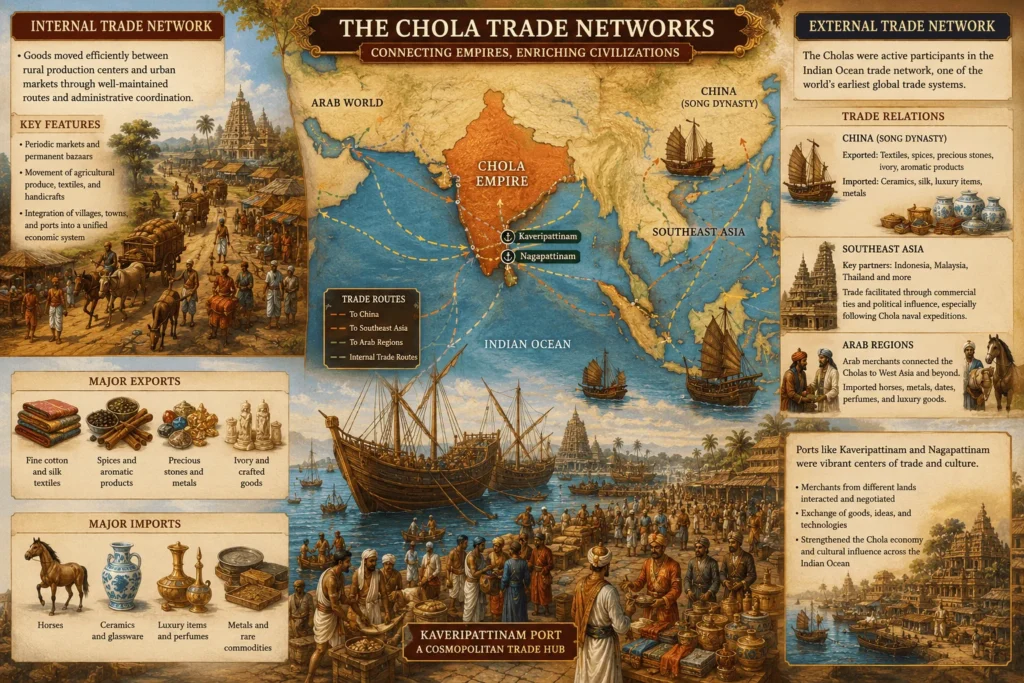
Internal and External Trade Systems
The Chola economy was deeply interconnected through robust internal and external trade networks. Internally, goods moved efficiently between rural production centers and urban markets via well-maintained routes and administrative coordination.
Key features of internal trade included:
- Periodic markets and permanent bazaars
- Movement of agricultural produce, textiles, and handicrafts
- Integration of villages, towns, and ports into a unified economic system
Externally, the Cholas were active participants in the Indian Ocean trade network, which functioned as one of the world’s earliest global trade systems.
Trade Relations with China, Southeast Asia, and Arab Regions
The Chola Empire maintained extensive trade relations across multiple regions:
- China:
Diplomatic missions and trade exchanges with the Song Dynasty are well documented. Goods such as textiles and spices were exported, while ceramics and luxury items were imported. - Southeast Asia:
Regions like present-day Indonesia, Malaysia, and Thailand were key partners. Trade was facilitated through both commercial ties and political influence, especially following Chola naval expeditions. - Arab World:
Arab merchants played a significant role in Indian Ocean trade, connecting the Cholas to West Asia and beyond. Horses, a critical military resource, were imported through these networks.
Major exports included:
- Fine cotton and silk textiles
- Spices and aromatic products
- Precious stones and metals
- Ivory and crafted goods
Imports ranged from luxury items to essential commodities, reflecting a balanced and diversified trade system.
Ports such as Kaveripattinam and Nagapattinam functioned as cosmopolitan trade hubs, where merchants from different cultures interacted, negotiated, and exchanged goods and ideas.
Merchant Guilds
Role of Organized Trade Bodies
One of the most distinctive features of the Chola economy was the presence of powerful merchant guilds, which operated as highly organized and autonomous trade bodies.
Prominent guilds included:
- Ayyavole 500 (Ainnurruvar)
- Manigramam
- Nanadesi
These guilds were not merely commercial associations; they were institutional networks with transregional reach, operating across South India and extending into Southeast Asia.
Their functions included:
- تنظيم (organization) of trade routes and caravans
- Negotiation of trade agreements
- Protection of merchants and goods
- Management of warehouses and ports
Guilds often received royal patronage, but they also enjoyed considerable independence, allowing them to operate efficiently across different political territories.
Economic Influence
The influence of merchant guilds extended far beyond commerce:
- Economic Power:
They controlled significant portions of trade, influencing prices, supply chains, and market stability. - Cultural Exchange:
As they traveled and established settlements abroad, guild members carried with them language, religion, art, and customs, contributing to cultural diffusion. - Institutional Contributions:
Guilds often funded temples, public works, and charitable activities, integrating economic activity with social and religious life. - Global Connectivity:
By linking South India with distant markets, these guilds played a crucial role in positioning the Chola Empire within early global trade networks.
In many ways, these guilds functioned like early multinational corporations, combining economic ambition with organizational sophistication.
The economy of the Chola Empire was a finely balanced system built on agricultural strength, expansive trade networks, and powerful commercial institutions. The integration of these elements allowed the Cholas to achieve sustained prosperity and global engagement. Their economic model—grounded in infrastructure, organization, and openness to exchange—offers a compelling example of how pre-modern societies could achieve both stability and dynamism on a global scale.
Art, Architecture, and Cultural Achievements
The cultural legacy of the Chola Dynasty represents one of the most refined artistic traditions in Indian history. Far beyond political power, the Cholas invested deeply in architecture, sculpture, and visual arts, creating works that continue to inspire historians, artists, and architects worldwide. Their artistic vision was not isolated—it was closely tied to religion, economy, and governance, making art an integral part of everyday life as well as statecraft.
Temple Architecture
Features of Dravidian Style
Chola temple architecture is a pinnacle of the Dravidian style, characterized by precision, symmetry, and monumental scale. Unlike earlier periods where temples were modest structures, the Cholas transformed them into grand architectural complexes that functioned as spiritual, cultural, and economic centers.
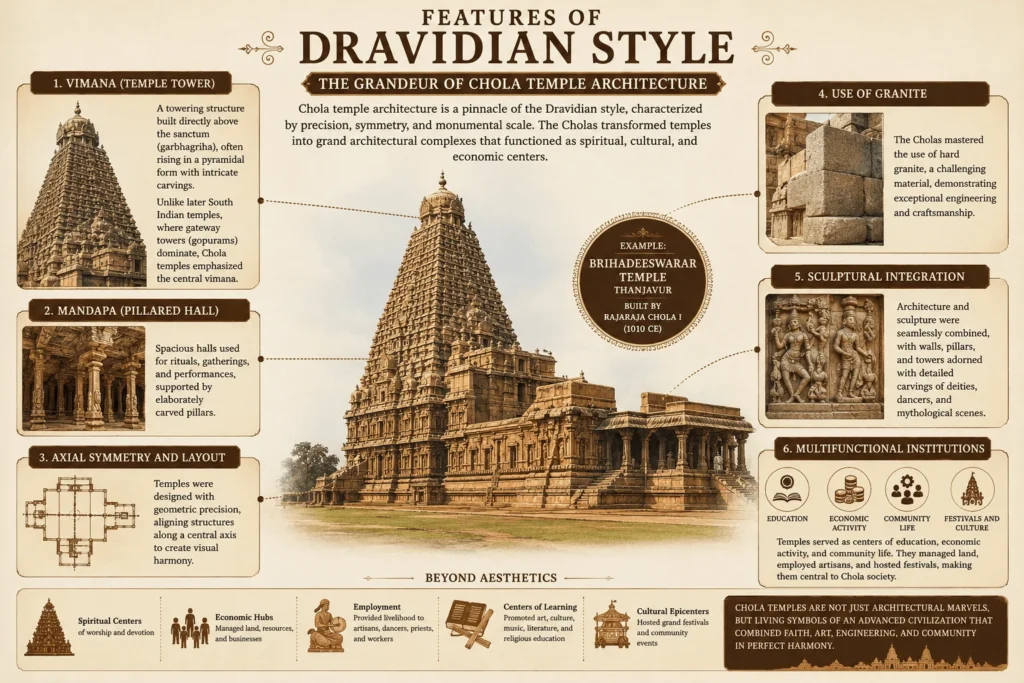
Key features of Chola (Dravidian) architecture include:
- Vimana (Temple Tower):
A towering structure built directly above the sanctum (garbhagriha), often rising in a pyramidal form with intricate carvings. Unlike later South Indian temples, where gateway towers (gopurams) dominate, Chola temples emphasized the central vimana. - Mandapa (Pillared Hall):
Spacious halls used for rituals, gatherings, and performances, supported by elaborately carved pillars. - Axial Symmetry and Layout:
Temples were designed with geometric precision, aligning structures along a central axis to create visual harmony. - Use of Granite:
The Cholas mastered the use of hard granite, a challenging material, demonstrating exceptional engineering and craftsmanship. - Sculptural Integration:
Architecture and sculpture were seamlessly combined, with walls, pillars, and towers adorned with detailed carvings of deities, dancers, and mythological scenes.
Beyond aesthetics, temples served as multifunctional institutions—centers of education, economic activity, and community life. They managed land, employed artisans, and hosted festivals, making them central to Chola society.
Iconic Monuments
Brihadeeswarar Temple
Commissioned by Rajaraja Chola I in the early 11th century CE, the Brihadeeswarar Temple (also known as Rajarajeswaram) is widely regarded as the crown jewel of Chola architecture.
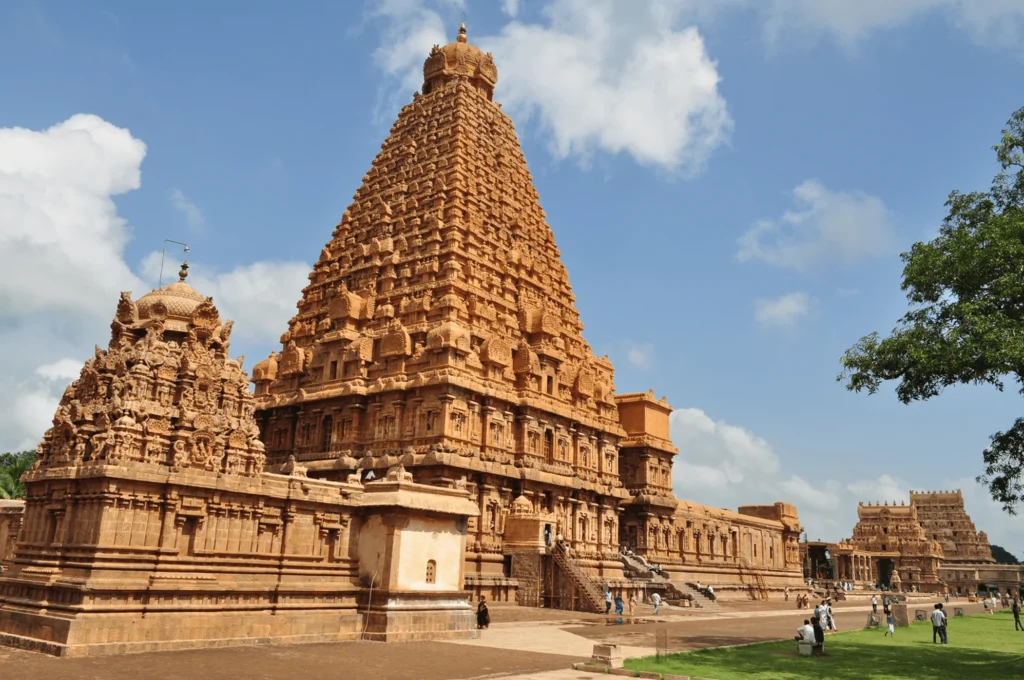
What makes this monument extraordinary:
- A towering vimana rising over 60 meters, one of the tallest of its time
- Built entirely of granite, despite the absence of nearby quarries
- Precision engineering that allowed massive stones to be placed at great heights
- Intricate carvings and inscriptions detailing administration, donations, and rituals
The temple is not just an architectural marvel—it is a historical document in stone, offering invaluable insights into Chola governance, economy, and religious practices. Its scale and symmetry reflect the ambition of an empire at its peak.
Gangaikonda Cholapuram Temple
Built by Rajendra Chola I, this temple symbolizes the continuation and refinement of Chola architectural excellence.
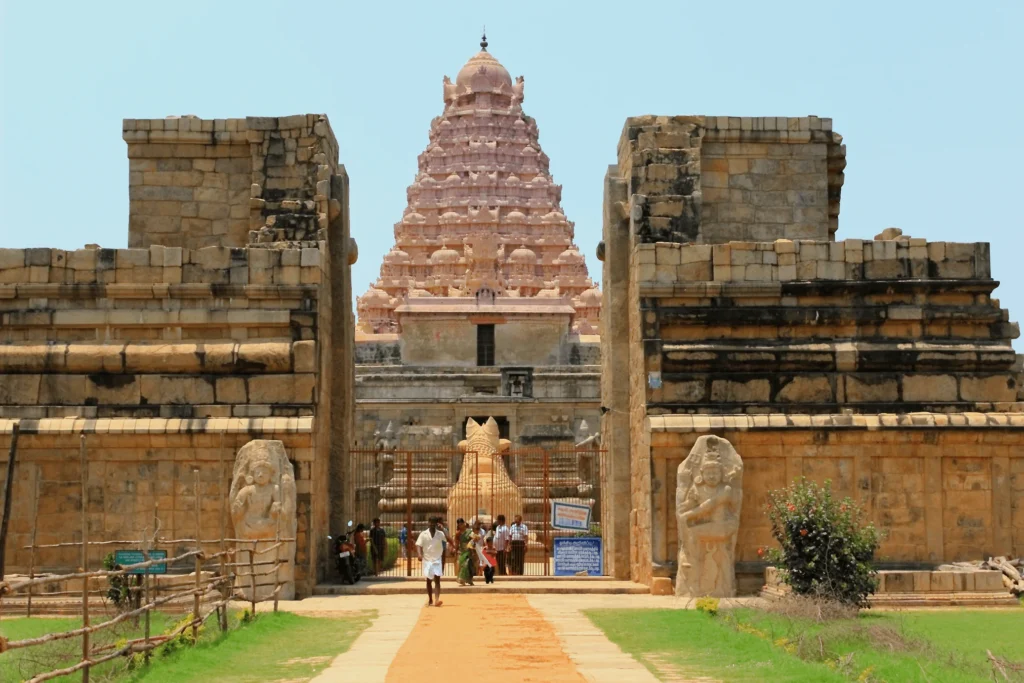
While inspired by the Brihadeeswarar Temple, it introduces notable innovations:
- A slightly shorter but more gracefully curved vimana
- Enhanced sculptural detailing with softer, more fluid forms
- Integration within a planned capital city, reflecting urban sophistication
The temple commemorates Rajendra’s northern campaigns and the symbolic bringing of Ganges water to the south, blending political achievement with spiritual symbolism.
Sculpture and Fine Arts
Bronze Sculptures (e.g., Nataraja)
Perhaps the most celebrated artistic contribution of the Cholas lies in their bronze sculptures, which represent a high point in Indian metallurgical and artistic tradition.
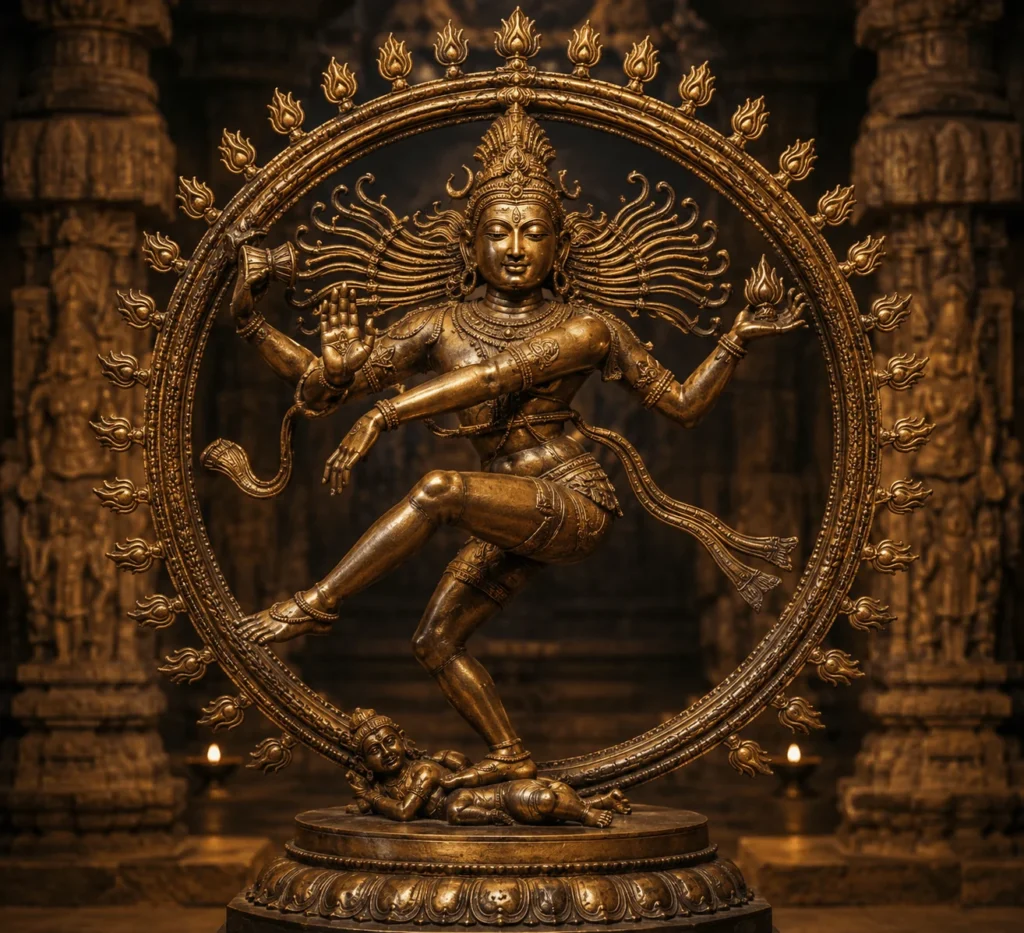
The iconic image of Nataraja (Lord Shiva as the cosmic dancer) exemplifies this mastery:
- Perfect balance between movement and stillness
- Symbolism of creation, preservation, and destruction
- Exquisite detailing achieved through the lost-wax casting technique
These sculptures were not static artifacts; they were processional deities, carried during festivals and integrated into living religious traditions. Their aesthetic appeal lies in their realism, grace, and spiritual depth, making them globally recognized masterpieces.
Paintings and Murals
Although less widely preserved than sculptures, Chola paintings and murals provide a fascinating glimpse into their artistic sensibilities.
Key characteristics include:
- Depictions of religious themes, royal processions, and daily life
- Use of natural pigments and organic materials
- Emphasis on expressive figures and narrative storytelling
The murals inside the Brihadeeswarar Temple are particularly significant, showcasing:
- Royal patronage and courtly life
- Devotional scenes with dynamic compositions
- Early techniques that influenced later South Indian painting traditions
These artworks highlight the Cholas’ ability to blend narrative, devotion, and artistic technique, creating visual stories that complemented their architectural achievements.
The art, architecture, and cultural achievements of the Cholas reflect a civilization that valued both grandeur and detail. Their temples were not merely structures but living institutions; their sculptures were not just art but expressions of philosophy; and their paintings were not decorative but narrative. Together, these elements form a legacy that continues to define South Indian cultural identity and stands as a testament to the Cholas’ enduring brilliance in human creativity.
Religion and Social Structure
The social fabric of the Chola Dynasty was deeply intertwined with religion, community institutions, and evolving social hierarchies. Rather than existing as separate domains, faith, governance, and everyday life formed a unified system, where temples acted as anchors of both spiritual and socio-economic activity. This integration created a society that was structured yet dynamic, rooted in tradition yet open to cultural exchange.
Religious Beliefs
Dominance of Shaivism
During the Chola period, Shaivism (worship of Lord Shiva) emerged as the most prominent religious tradition, enjoying strong royal patronage. Kings such as Rajaraja Chola I and Rajendra Chola I identified themselves as devoted followers of Shiva, commissioning grand temples and endowing them with land, wealth, and resources.
This religious inclination was not merely personal—it was institutionalized through temple construction, rituals, and cultural expression:
- Temples dedicated to Shiva became central to urban and rural landscapes
- Ritual practices, festivals, and devotional singing were widely promoted
- The Bhakti movement, emphasizing personal devotion, influenced religious life
The philosophical and artistic representation of Shiva, especially in forms like Nataraja, reflected a deeper understanding of cosmic order, linking spirituality with artistic expression.
Religious Tolerance
Despite the dominance of Shaivism, the Chola Empire demonstrated a notable degree of religious inclusivity. Vaishnavism (worship of Vishnu), Buddhism, and Jainism continued to exist and receive patronage during this period.
Evidence of this tolerance includes:
- Construction and maintenance of Vishnu temples alongside Shiva temples
- Continued presence of Buddhist institutions, especially in coastal regions
- Jain communities contributing to trade and intellectual life
This pluralistic approach suggests that the Cholas viewed religion not as a tool for exclusion but as a means of cultural enrichment and social cohesion. Their openness facilitated interaction with diverse communities, especially through trade networks that brought foreign influences into the region.
Role of Temples in Society
Economic and Cultural Centers
Temples in the Chola period were far more than places of worship—they functioned as multifaceted institutions that played a central role in the economy and culture.
Economically, temples:
- Owned vast tracts of agricultural land
- Employed priests, artisans, dancers, musicians, and administrators
- Acted as centers for redistribution of wealth through donations and endowments
They also served as:
- خزाने (treasuries) for storing wealth and valuables
- Administrative hubs where records were maintained
- Sponsors of irrigation projects and local infrastructure
Culturally, temples were:
- Centers for music, dance, and theatrical performances
- Spaces for education and transmission of knowledge
- Venues for festivals that brought communities together
This integration of economic and cultural functions made temples the heartbeat of Chola society.
Influence on Daily Life
The influence of temples extended into the daily lives of people at every level:
- Agricultural Cycles: Festivals and rituals were often aligned with sowing and harvesting seasons
- Social Interaction: Temples served as gathering spaces for community decision-making and celebrations
- Moral Framework: Religious teachings shaped ethical behavior and social norms
- Employment: A wide range of professions—from sculptors to accountants—were linked to temple activities
In essence, temples acted as centers of continuity, ensuring that religious practices, economic activities, and social interactions remained interconnected.
Social Organization
Class Structure
Chola society was structured but not entirely rigid, reflecting both traditional hierarchies and practical adaptations.
- Brahmins:
Held a prominent position as priests, scholars, and administrators, often residing in Brahmadeya villages granted by the state - Vellalars (Agricultural Class):
Formed the backbone of the agrarian economy, managing land and production - Artisans and Traders:
Included craftsmen, merchants, and guild members who contributed to economic vitality - Laboring Classes:
Engaged in manual work, including agriculture, construction, and service roles
While elements of the caste system were present, economic roles and local governance sometimes allowed for mobility and influence, particularly through merchant guilds and village assemblies.
Role of Women and Communities
The position of women in Chola society presents a nuanced picture:
- Property Rights and Participation:
Besides managing household responsibilities, some women also owned land, made charitable donations to temples, and participated in religious practices. - Cultural Contributions:
Women played significant roles in temple culture as dancers (devadasis), musicians, and patrons of the arts - Royal Women:
Beyond their royal duties, queens and princesses actively supported temples and social institutions, helping guide their growth and functioning.
However, like most pre-modern societies, gender roles were influenced by social norms, and opportunities varied across class and community.
Communities in Chola society were highly organized:
- Village assemblies fostered collective decision-making
- Merchant guilds created networks of economic cooperation
- Religious institutions provided shared identity and cohesion
This community-centric structure ensured that governance and social life were participatory, even within a hierarchical framework.
Religion and social structure in the Chola Empire were deeply interconnected, creating a society where faith influenced governance, economy, and daily life. The dominance of Shaivism, balanced by religious tolerance, combined with the central role of temples and a structured yet participatory social system, reflects a civilization that achieved both stability and cultural richness. This integrated approach remains one of the defining features of the Chola legacy, offering valuable insights into the relationship between belief systems and societal organization.
Literature and Intellectual Contributions
The intellectual life of the Chola Dynasty reflects a civilization that valued knowledge, creativity, and cultural continuity as much as political power. During the Chola period, literature flourished not in isolation but as part of a broader ecosystem that included temples, courts, and scholarly communities. This era witnessed the refinement of Tamil as a classical literary language, the expansion of devotional expression, and the sustained patronage of scholars and artists.
Growth of Tamil Literature
Literary Advancements During Chola Rule
The Chola period marked a significant phase in the evolution of Tamil literature, building upon the foundations laid during the Sangam age. Unlike the earlier period, where poetry was often secular and heroic, Chola-era literature increasingly reflected religious devotion, ethical reflection, and philosophical depth.
Several factors contributed to this literary growth:
- Institutional Support:
Temples and royal courts became centers of literary activity, where poets, scholars, and scribes were supported through patronage and endowments. - Language Standardization:
Tamil grammar, vocabulary, and stylistic conventions were refined, contributing to the development of a more structured literary tradition. - Expansion of Genres:
Literature during this period included not only poetry but also epics, commentaries, hymns, and didactic works. - Integration with Religion:
The Bhakti movement played a central role in shaping literary themes, emphasizing personal devotion and emotional expression.
Importantly, inscriptions from the Chola period also serve as a form of functional literature, recording administrative decisions, donations, and historical events in precise and formal Tamil. These inscriptions demonstrate the practical application of literary skills in governance, further highlighting the intellectual sophistication of the era.
Notable Works and Scholars
Ramavataram by Kamban
Among the most celebrated literary achievements of the Chola period is the Ramavataram, composed by the poet Kamban (often referred to as Kambar). This work is a Tamil retelling of the Sanskrit Ramayana, but it is far more than a translation—it is a creative reinterpretation that reflects Tamil cultural sensibilities and poetic brilliance.
Key features of Kamban’s Ramavataram:
- Rich and expressive language that elevates Tamil poetic tradition
- Deep philosophical undertones, blending devotion with moral inquiry
- Vivid characterization and emotional depth, particularly in the portrayal of Rama and Sita
Kamban’s work exemplifies how the Chola period fostered literary innovation rooted in cultural adaptation, making classical narratives accessible and meaningful to regional audiences.
Devotional Literature
The Chola era also saw the consolidation and continued influence of devotional (Bhakti) literature, which had begun in earlier centuries with the hymns of the Nayanmars (Shaivite saints) and Alvars (Vaishnavite saints).
During this period:
- These hymns were compiled, preserved, and integrated into temple rituals
- Poetry became a medium for expressing personal devotion and spiritual experience
- Literature bridged the gap between elite scholarship and popular religious practice
Devotional texts emphasized:
- Emotional connection with the divine
- Ethical living and humility
- Inclusivity, often transcending rigid social boundaries
This body of literature played a crucial role in shaping religious identity and cultural cohesion, ensuring that literary expression remained accessible to a wide audience.
Patronage of Arts and Education
A defining feature of the Chola intellectual tradition was active and sustained patronage. The state, along with temple institutions, provided an environment where scholars and artists could thrive.
Forms of patronage included:
- Land grants and financial support for poets, teachers, and scholars
- Establishment of educational centers (ghatikas and temple schools)
- Providing resources and encouragement for the development of literature, arts, and cultural performances.
Temples, in particular, functioned as centers of learning, where:
- Sacred texts were studied and recited
- Knowledge of language, philosophy, and arts was transmitted
- Scholars engaged in intellectual discourse
Royal courts also played a vital role by:
- Encouraging literary competitions and debates
- Recognizing and rewarding excellence in scholarship
- Promoting the use of Tamil alongside Sanskrit, fostering linguistic diversity
This ecosystem ensured that intellectual activity was not confined to a small elite but was embedded within the cultural fabric of society.
The literary and intellectual contributions of the Chola period reflect a civilization that placed a high value on knowledge, expression, and cultural continuity. From the refinement of Tamil literature to the creation of masterpieces like Kamban’s Ramavataram, and from the spread of devotional poetry to the institutional support of scholars, the Cholas nurtured an environment where ideas could flourish. Their legacy in literature is not merely historical—it continues to influence language, culture, and thought in South India and beyond.
Foreign Relations and Cultural Influence
The global outlook of the Chola Dynasty distinguishes it as one of the few pre-modern Indian powers that actively engaged with the wider world. Their foreign relations were not limited to warfare or territorial ambition; instead, they combined diplomacy, trade, and cultural exchange to build enduring connections across Asia. The Cholas operated within the dynamic Indian Ocean network, positioning themselves as both political actors and cultural transmitters.
Diplomatic Relations
The Cholas maintained formal diplomatic relations with major contemporary powers, most notably imperial China under the Song Dynasty. Historical records from Chinese sources document Chola embassies visiting the Chinese court, carrying gifts and establishing trade agreements. These diplomatic missions served multiple purposes:
- Strengthening commercial ties
- Enhancing political prestige
- Facilitating safe passage for merchants
Such interactions were not one-sided. Chinese traders and envoys also engaged with Chola ports, contributing to a mutually beneficial exchange of goods and ideas. Items like textiles, spices, and precious stones flowed outward from India, while silk, ceramics, and luxury goods entered the Chola domain.
Beyond China, the Cholas interacted with:
- The Arab world through maritime trade networks
- Sri Lanka through both diplomacy and conquest
- Southeast Asian kingdoms through a mix of diplomacy and military assertion
What makes Chola diplomacy noteworthy is its pragmatic and adaptive nature. They balanced القوة (power) with cooperation, ensuring that their influence extended without overextending their resources.
Influence in Southeast Asia
The Chola impact on Southeast Asia represents one of the most significant examples of cultural diffusion in pre-modern history. Through trade, diplomacy, and selective military interventions, the Cholas contributed to the spread of Indian cultural elements across regions such as present-day Indonesia, Malaysia, Thailand, and Cambodia.
This influence is visible in several domains:
- Religion:
Hinduism, particularly Shaivism and Vaishnavism, gained prominence in Southeast Asia, often blending with local traditions. - Architecture:
Temple designs in parts of Southeast Asia reflect Dravidian architectural elements, including tiered structures and sculptural motifs. - Language and Script:
Sanskrit and Tamil influenced local languages, especially in inscriptions and administrative terminology. - Political Ideas:
Concepts of kingship, राज्य (statecraft), and ceremonial practices were adapted by local rulers.
It is important to note that this process was not one of forced imposition. Instead, it was a selective and adaptive exchange, where local cultures incorporated Indian elements in ways that suited their own traditions. The Cholas acted as facilitators rather than colonizers, enabling a shared cultural space across the Bay of Bengal.
Maritime Cultural Exchange
At the core of Chola foreign relations was maritime trade, which functioned as the primary vehicle for cultural exchange. The Indian Ocean was not merely a व्यापारिक (commercial) route—it was a cultural corridor where ideas, beliefs, technologies, and artistic forms traveled alongside goods.
Key aspects of this exchange include:
- Merchant Mobility:
Traders, particularly those associated with powerful guilds, established settlements in foreign lands, carrying with them language, religion, and customs. - Religious Transmission:
Temples and religious practices spread through merchant communities, creating shared spiritual spaces across regions. - Artistic Influence:
Styles of sculpture, architecture, and decorative arts moved across borders, influencing local artistic traditions. - Knowledge Exchange:
Navigation techniques, administrative practices, and even culinary influences were shared through sustained contact.
Chola ports such as Nagapattinam became cosmopolitan centers, where people from diverse backgrounds interacted regularly. This environment fostered openness, innovation, and mutual respect among different cultures.
The foreign relations and cultural influence of the Cholas highlight their role as a bridge between civilizations. Through diplomacy, strategic engagement, and vibrant trade networks, they extended their presence far beyond their territorial boundaries. More importantly, they facilitated a two-way exchange of culture and ideas, contributing to a shared heritage across Asia. This legacy underscores the Cholas’ place not only in Indian history but also in the broader narrative of early global interconnectedness.
Decline and Fall of the Chola Empire
The decline of the Chola Dynasty was not the result of a single निर्णायक event but a gradual process shaped by internal weaknesses and mounting external pressures. After reaching extraordinary heights under rulers like Rajaraja Chola I and Rajendra Chola I, the empire began to lose its cohesion and strategic edge. By the 13th century CE, the once-mighty Chola state had fragmented, giving way to emerging regional powers.
Understanding this decline requires a nuanced examination of leadership transitions, geopolitical shifts, and structural challenges within the empire.
Weak Successors
One of the most critical factors in the decline of the Chola Empire was the absence of consistently strong leadership after its golden age. While earlier rulers demonstrated exceptional administrative and military capabilities, later kings struggled to maintain the same level of authority and vision.
Key leadership challenges included:
- Diminished Central Control:
Successors were often unable to effectively manage the vast territories inherited from their predecessors, leading to weakening authority over distant provinces. - Succession Disputes:
Internal conflicts over succession created instability, diverting attention from governance and external threats. - Reduced Military Initiative:
Later rulers lacked the strategic ambition that had characterized earlier expansion, resulting in a defensive rather than proactive approach to power. - Overdependence on Established Systems:
While the Chola administrative framework was robust, it required strong leadership to function effectively. In the absence of capable rulers, even well-designed institutions began to falter.
This phase highlights a recurring historical pattern: institutional strength alone cannot sustain an empire without capable leadership to guide it.
External Pressures
As the Cholas weakened internally, rival powers seized the opportunity to assert themselves. Two प्रमुख forces emerged as significant challengers:
- The Pandyas:
Based in southern Tamil Nadu, the Pandyas re-emerged as a formidable शक्ति (power), gradually reclaiming territories that had once been under Chola control. Their resurgence was marked by military campaigns aimed at weakening Chola dominance in the region. - The Hoysalas:
Operating from the Deccan region, the Hoysalas expanded southward, challenging Chola authority in Karnataka and neighboring areas. Their strategic positioning allowed them to exploit Chola vulnerabilities effectively.
The combined pressure from these القوى (powers) created a multi-front challenge that the weakened Chola state struggled to manage.
Additional external challenges included:
- Loss of control over key trade routes
- Decline in maritime dominance
- Increased competition for resources and influence
These pressures not only reduced territorial control but also undermined the economic foundations of the empire.
Final Decline
Political Fragmentation
By the late 12th and early 13th centuries, the Chola Empire had entered a phase of political fragmentation. Central authority weakened significantly, and regional governors began to assert autonomy.
Key aspects of this fragmentation included:
- Provinces operating with increasing independence
- Decline in coordination between administrative units
- Erosion of loyalty among local elites and military leaders
The once-integrated system of governance began to disintegrate, making it difficult to maintain order or respond effectively to external threats.
End of the Dynasty
The final phase of the Chola decline culminated in the gradual absorption of their territories by rival powers, particularly the resurgent Pandyas. By the mid-13th century CE, the Cholas had effectively lost their political relevance as a dominant शक्ति.
The end of the dynasty was not marked by a single निर्णायक battle but by:
- Continuous territorial losses
- Economic weakening due to disrupted trade
- Loss of strategic centers of power
Despite this राजनीतिक decline, it is important to recognize that the cultural and institutional legacy of the Cholas endured. Their contributions to administration, architecture, literature, and maritime activity continued to influence subsequent South Indian kingdoms.
The fall of the Chola Empire illustrates the complex interplay between leadership, institutional strength, and external dynamics. While internal challenges weakened the core of the empire, external القوى accelerated its decline. Yet, even in decline, the Cholas left behind a legacy that outlived their political सत्ता—proving that the true measure of a civilization lies not only in its rise but also in its enduring influence.
Legacy of the Chola Dynasty
The legacy of the Chola Dynasty extends far beyond its political lifespan. Even after its decline in the 13th century, the Chola imprint continued to shape governance, culture, architecture, and global interactions across South India and beyond. What makes the Cholas historically significant is not merely the scale of their empire, but the durability of their institutions and ideas, many of which influenced later kingdoms and continue to resonate in contemporary cultural practices.
Political and Administrative Legacy
One of the most enduring contributions of the Cholas lies in their innovative administrative framework, which became a model for subsequent South Indian polities.
Later dynasties such as the Pandyas, Hoysalas, and even the Vijayanagara Empire adopted and adapted several Chola administrative practices, including:
- Structured Territorial Divisions:
The hierarchical organization into mandalams, nadus, and villages provided a scalable model for governance. - Decentralized Local Governance:
The system of village assemblies (sabha, ur, nagaram) inspired later administrative setups that balanced central authority with local participation. - Efficient Revenue Administration:
Detailed land surveys and systematic taxation influenced how future kingdoms managed agrarian economies. - Record-Keeping Traditions:
The practice of documenting decisions through inscriptions ensured continuity and transparency, setting a precedent for administrative accountability.
The Chola model demonstrated that strong central leadership could coexist with empowered local institutions, a concept that remains relevant in modern governance frameworks.
Architectural and Cultural Heritage
The architectural and artistic achievements of the Cholas are among their most visible and celebrated legacies. Their temples were not only places of worship but also symbols of technological innovation, cultural identity, and artistic excellence.
Monuments such as the Brihadeeswarar Temple and the Gangaikonda Cholapuram Temple continue to stand as UNESCO-recognized heritage sites, attracting scholars, architects, and visitors from around the world.
The enduring impact of Chola architecture includes:
- Establishment of the Dravidian temple style as a dominant architectural tradition in South India
- Mastery of large-scale stone construction and engineering techniques
- Integration of sculpture, painting, and spatial design into a unified artistic expression
Equally significant is the legacy of Chola bronze sculptures, particularly the iconic Nataraja form of Shiva. These works remain benchmarks of artistic excellence, admired for their balance, symbolism, and craftsmanship.
Culturally, the Cholas helped institutionalize:
- Temple-based performing arts such as music and dance
- Ritual traditions that continue in South Indian temples today
- The preservation and promotion of Tamil language and literature
This cultural continuity ensures that the Chola influence is not confined to history—it remains a living tradition.
Maritime and Global Impact
Perhaps one of the most forward-looking aspects of the Chola legacy is their maritime vision. At a time when most Indian kingdoms were land-focused, the Cholas recognized the strategic and economic importance of the seas.
Their achievements in this domain include:
- Development of a powerful navy capable of long-distance expeditions
- Control over key trade routes in the Indian Ocean
- Establishment of connections with Southeast Asia, China, and the Arab world
These activities position the Cholas as an early example of globalization, where goods, ideas, and cultural practices moved across regions through interconnected networks.
Their maritime legacy can be understood through:
- Economic Integration: Facilitating large-scale trade that connected diverse regions
- Cultural Exchange: Spreading Indian art, religion, and language while also absorbing external influences
- Strategic Awareness: Recognizing that economic prosperity and political power were closely linked to control over trade routes
In many ways, the Chola approach anticipates modern concepts of global connectivity and soft power, where influence is exercised not only through conquest but also through culture and commerce.
The legacy of the Chola Dynasty is a testament to the enduring power of well-designed institutions, artistic brilliance, and global vision. Their contributions to governance shaped future political systems; their temples and art continue to inspire awe; and their maritime activities highlight India’s early engagement with the wider world. The Cholas, therefore, are not just a chapter in history—they are a foundation upon which much of South India’s cultural and historical identity is built.
Conclusion & FAQs
Summary of Key Contributions
The journey of the Chola Dynasty stands as one of the most compelling narratives in Indian history—marked by resilience, innovation, and enduring influence. From their early beginnings in the Kaveri basin to their rise as a transregional empire, the Cholas demonstrated a rare ability to integrate political strength with cultural sophistication and economic vision.
Their key contributions can be understood across multiple dimensions:
- Political and Administrative Excellence:
The Cholas developed a governance model that balanced centralized authority with empowered local institutions. Their systems of revenue management, record-keeping, and village self-governance remain among the most advanced in pre-modern history. - Military and Maritime Power:
With a disciplined army and a strategically deployed navy, the Cholas expanded their influence across South Asia and Southeast Asia. Their naval expeditions under leaders like Rajendra Chola I established them as pioneers of maritime dominance in the Indian Ocean. - Economic Prosperity and Trade Networks:
A strong agrarian base supported by irrigation, combined with vibrant trade networks and merchant guilds, created a stable and prosperous economy that sustained imperial ambitions. - Artistic and Architectural Brilliance:
Monumental achievements such as the Brihadeeswarar Temple reflect their mastery in architecture and engineering, while bronze sculptures and murals showcase their artistic depth. - Cultural and Intellectual Contributions:
The Cholas nurtured Tamil literature, devotional traditions, and educational institutions, ensuring the preservation and growth of intellectual life. - Global Engagement:
Through diplomacy and trade, they fostered cultural exchange across Asia, contributing to an early form of globalization that connected India with distant regions.
Taken together, these contributions reveal a civilization that was not only powerful but also deeply organized, culturally rich, and globally aware.
Relevance in Modern Context
Lessons from Chola Governance and Culture
While separated from us by centuries, the Chola experience offers timeless insights that remain relevant in the modern world.
- Decentralized Governance with Accountability:
The Chola model of empowering local institutions while maintaining central oversight mirrors modern democratic principles. Their emphasis on transparency through inscriptions highlights the importance of accountable governance. - Sustainable Resource Management:
Their investment in irrigation and agriculture demonstrates an early understanding of sustainable development, a lesson that resonates strongly in today’s context of environmental challenges. - Integration of Economy and Culture:
The Cholas did not treat economic growth and cultural development as separate pursuits. Their temples functioned as economic hubs and cultural centers, illustrating how holistic development can strengthen societies. - Global Outlook with Cultural Identity:
By engaging actively in international trade and diplomacy while preserving their cultural identity, the Cholas offer a model for balanced globalization—one that embraces exchange without losing authenticity. - Support for Knowledge and Creativity:
Their patronage of literature, arts, and education underscores the importance of investing in intellectual and cultural capital for long-term societal progress.
In closing, the legacy of the Cholas is not confined to the past—it continues to inform the present and inspire the future. Their ability to harmonize power with purpose, governance with participation, and tradition with innovation makes them one of the most remarkable civilizations in world history. Studying the Cholas is not merely an exploration of history; it is an opportunity to understand how enduring systems of excellence are built and sustained.
Frequently Asked Questions (FAQs)
Who was the greatest ruler of the Chola Dynasty?
Most historians consider Rajaraja Chola I as the greatest ruler due to his administrative reforms, military conquests, and architectural achievements.
Why is the Chola Dynasty important in Indian history?
The Cholas are significant for their advanced governance, naval power, temple architecture, and global trade connections, making them one of the most influential South Indian empires.
What made the Chola navy unique?
The Chola navy was one of the earliest organized naval forces in India, capable of long-distance expeditions and control over maritime trade routes, especially under Rajendra Chola I.
Which are the most famous Chola temples?
The most iconic examples include the Brihadeeswarar Temple and the Gangaikonda Cholapuram Temple, both known for their architectural brilliance.
How did the Cholas influence Southeast Asia?
Through trade and cultural exchange, the Cholas contributed to the spread of Indian religion, architecture, language, and governance practices in Southeast Asia.
What led to the decline of the Chola Empire?
The decline was caused by weak successors, external invasions by Pandyas and Hoysalas, and gradual political fragmentation.